


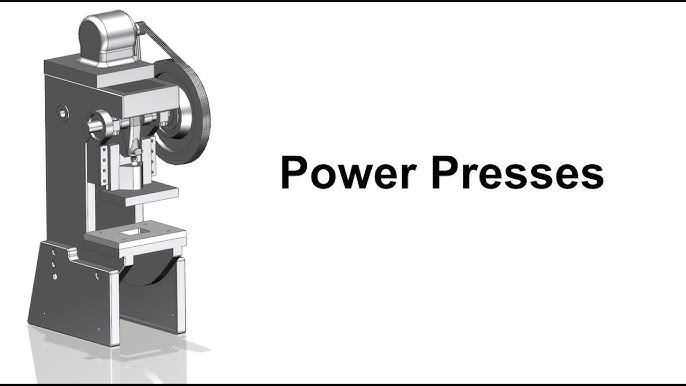
Manufacturing Processes Used by Power Press Manufacturers
Power press machines are essential equipment in modern manufacturing, enabling industries to perform precise metal forming, punching, stamping, and bending operations. These machines are widely used in automotive, electronics, appliance, and construction industries where high accuracy and efficiency are critical. The reliability and performance of a power press machine largely depend on the manufacturing processes employed by the manufacturer. Understanding these processes highlights the expertise, precision, and technology required to produce high-quality industrial equipment.
A Power Press Manufacturer employs a series of carefully planned processes to ensure that each machine meets strict standards for performance, durability, and safety. From material selection to component machining, assembly, and final testing, these manufacturers combine advanced technology with skilled labor to produce machines capable of withstanding heavy-duty industrial operations. Each step of the process is designed to maintain precision and consistency, which are essential for high-volume production environments.
Table of Contents
ToggleMaterial Selection and Preparation
The first step in the manufacturing process is selecting high-quality materials. Components such as frames, rams, slides, gears, and hydraulic cylinders are typically made from high-strength steel or alloy materials. Raw materials undergo inspection for tensile strength, hardness, and chemical composition to ensure compliance with design specifications. Material preparation may involve cutting, shaping, heat treatment, and surface finishing to improve durability and wear resistance. Proper material selection and preparation are crucial to ensure the long-term reliability and operational accuracy of the power press machine.
Precision Machining of Components
Once materials are prepared, critical components are machined to precise dimensions. CNC machines, milling machines, lathes, and grinding equipment are used to produce parts with tight tolerances. Components such as frames, rams, gears, and flywheels are machined to exact specifications to ensure smooth assembly and proper functioning. Dimensional accuracy, surface finish, and alignment are continuously monitored using precision measurement tools like micrometers, calipers, and coordinate measuring machines (CMMs). Precision machining is a key factor in achieving consistent performance and minimizing wear during machine operation.
Assembly and Integration
The assembly stage involves combining mechanical, hydraulic, and electrical components into a fully functional power press machine. Frames, slides, and rams are aligned using specialized jigs and fixtures to maintain structural integrity and operational accuracy. Hydraulic cylinders, pumps, and valves are installed and tested for leak-free performance. Electrical systems, including programmable logic controllers (PLCs), sensors, and servo motors, are integrated during assembly to enable automated and controlled machine operations. Proper assembly ensures the machine operates smoothly and safely under heavy-duty industrial conditions.
Quality Control and Inspection
Quality control is embedded throughout the manufacturing process. Components are inspected at each stage for dimensional accuracy, material integrity, and surface finish. During assembly, alignment and mechanical movement are checked to ensure correct operation. Once the machine is fully assembled, functional tests simulate real-world working conditions, measuring stroke accuracy, force consistency, cycle speed, and repeatability. Safety features, including emergency stops, interlocks, and light curtains, are rigorously tested. These quality control measures ensure that every machine meets industry standards and provides reliable performance in the field.
Surface Treatment and Corrosion Protection
Many power press components undergo surface treatment to improve wear resistance and reduce friction. Processes such as hardening, plating, and coating are applied to slides, rams, and die supports to extend component life and maintain operational efficiency. Corrosion protection measures, including painting and anodizing, are implemented to safeguard parts against environmental exposure. Proper surface engineering is essential to ensure the machine can endure repeated cycles without loss of performance.
Testing and Calibration
Before leaving the manufacturer, each power press machine undergoes thorough testing and calibration. Machines are tested under varying loads and operational speeds to verify performance parameters. Calibration ensures stroke length, force application, and cycle timing meet design specifications. Long-term durability testing may also be conducted to simulate extended operation and identify potential weaknesses. This step guarantees that the machine operates reliably and efficiently in industrial applications from the moment it is deployed.
Continuous Improvement and Innovation
Manufacturers continuously refine their processes to improve efficiency, precision, and sustainability. Feedback from clients, advances in materials science, and technological innovations such as automation, IoT monitoring, and energy-efficient drives are incorporated into production processes. By investing in research, development, and process optimization, power press manufacturers ensure that their machines remain competitive and capable of meeting the evolving demands of modern manufacturing industries.
Conclusion
The manufacturing processes used by power press manufacturers involve meticulous material selection, precision machining, accurate assembly, surface treatment, rigorous quality control, and thorough testing. By integrating advanced technology, skilled labor, and continuous improvement practices, a power press manufacturer ensures that every machine produced delivers high performance, durability, and safety. These processes are essential for supporting high-volume industrial operations and maintaining the reliability and efficiency required by today’s competitive manufacturing environments.