


The Role of Medical Silicone Tubes in Pharmaceutical and Laboratory Processes
Medical silicone tubes have become indispensable in pharmaceutical and laboratory environments due to their reliability, safety, and versatility. In these settings, precision and consistency are paramount, and the materials used in fluid transfer, gas delivery, and sample handling must meet stringent performance standards. Silicone tubing’s combination of biocompatibility, chemical resistance, and flexibility makes it an ideal choice for applications ranging from drug manufacturing to laboratory research.
Pharmaceutical and laboratory processes often require tubing that can safely handle reactive chemicals, biological fluids, and sterile solutions. Medical Silicone Tube is widely used in these environments because it does not leach harmful substances, resists contamination, and maintains structural integrity under extreme conditions. Its non-porous surface prevents microbial growth, ensuring that sensitive samples or pharmaceutical formulations remain uncontaminated during transfer and storage.
Table of Contents
ToggleApplications in Pharmaceutical Manufacturing
In pharmaceutical production, medical silicone tubes are commonly used for fluid transfer between reactors, filtration units, and storage vessels. Their chemical resistance allows them to handle a wide range of formulations, including aqueous solutions, organic solvents, and active pharmaceutical ingredients, without compromising the integrity of the substances being transported.
Silicone tubing is also essential in filling and dosing equipment, where precise delivery of liquids is critical. The tubing’s flexibility and smooth interior surface allow for consistent flow rates and accurate volume control. This ensures that medications are produced to exact specifications, which is vital for both efficacy and patient safety. Additionally, silicone tubes can withstand repeated sterilization, making them suitable for reusable production lines and reducing the risk of contamination in sterile environments.
Use in Laboratory Research
In laboratory settings, medical silicone tubing supports a variety of functions, including sample collection, fluid distribution, and gas delivery. Its biocompatibility makes it safe for handling biological samples such as blood, plasma, or cell cultures. Unlike traditional rubber or PVC tubing, silicone does not react with biological materials, reducing the likelihood of altered results or compromised experiments.
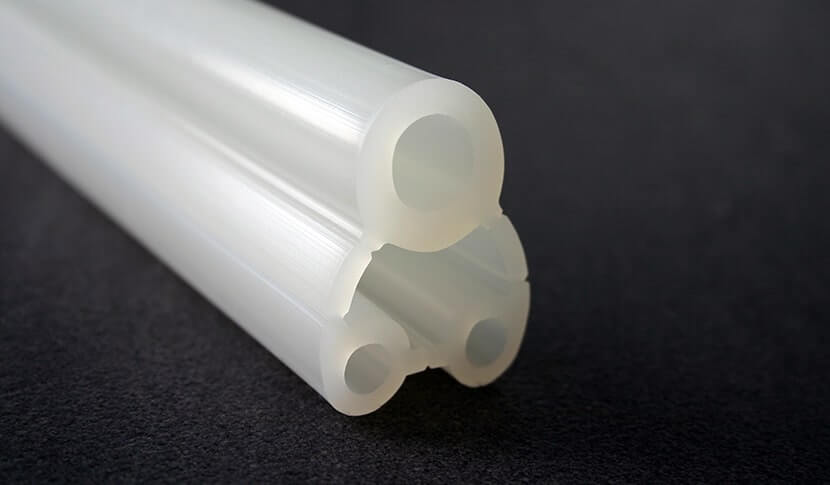
Silicone tubing is also used in analytical instruments, where precise and stable fluid flow is essential. Its transparency allows researchers to monitor fluid movement visually, detect bubbles, and ensure that no blockages occur. Multi-lumen silicone tubes enable simultaneous transport of different reagents or samples, streamlining laboratory workflows and increasing efficiency in complex experiments.
Sterilization and Reusability
Medical silicone tubes are capable of withstanding rigorous sterilization methods, including autoclaving, gamma irradiation, and chemical sterilants. This property is particularly valuable in pharmaceutical and laboratory settings, where contamination control is critical. Tubing that maintains flexibility and integrity after repeated sterilization cycles can be reused safely, which reduces waste and operational costs.
In contrast, traditional tubing materials, such as PVC or latex, may degrade or leach chemicals when subjected to repeated sterilization. Silicone’s durability ensures consistent performance over time, providing reliability in both production and research applications.
Chemical and Temperature Resistance
Pharmaceutical and laboratory processes often involve exposure to extreme temperatures and reactive chemicals. Medical silicone tubing is engineered to resist degradation in such conditions, maintaining both structural integrity and functional performance. Its high thermal tolerance allows it to operate safely in applications that involve heating or cooling of fluids, as well as in sterilization processes that require elevated temperatures.
The chemical resistance of silicone tubing ensures that it can handle acids, bases, solvents, and other reagents without reacting or contaminating the transported substances. This makes it highly suitable for pharmaceutical compounding, chemical assays, and formulation testing, where precision and reliability are non-negotiable.
Flexibility and Customization
Flexibility is another key advantage of medical silicone tubes in laboratory and pharmaceutical applications. Their ability to bend and conform to complex equipment layouts without kinking ensures uninterrupted flow and reduces the risk of system failure. Customization options, such as varying diameters, wall thicknesses, and multi-lumen designs, allow silicone tubing to be tailored for specific processes, enhancing efficiency and safety.
Color-coded silicone tubing also helps laboratory personnel quickly identify different lines, minimizing the risk of errors during fluid handling and experiments. These practical features make silicone tubing a versatile solution for both standard and highly specialized processes in pharmaceutical manufacturing and research.
Conclusion
Medical silicone tubes play a critical role in pharmaceutical and laboratory processes due to their biocompatibility, chemical and temperature resistance, flexibility, and durability. They ensure precise and reliable fluid transfer, support sterile operations, and maintain sample integrity in demanding environments. By enabling safe handling of biological fluids, reactive chemicals, and sterile formulations, silicone tubing contributes significantly to the efficiency, safety, and reliability of pharmaceutical manufacturing and laboratory research. Its adaptability and performance make it a preferred choice over traditional materials, reinforcing its indispensable role in modern healthcare and scientific applications.