


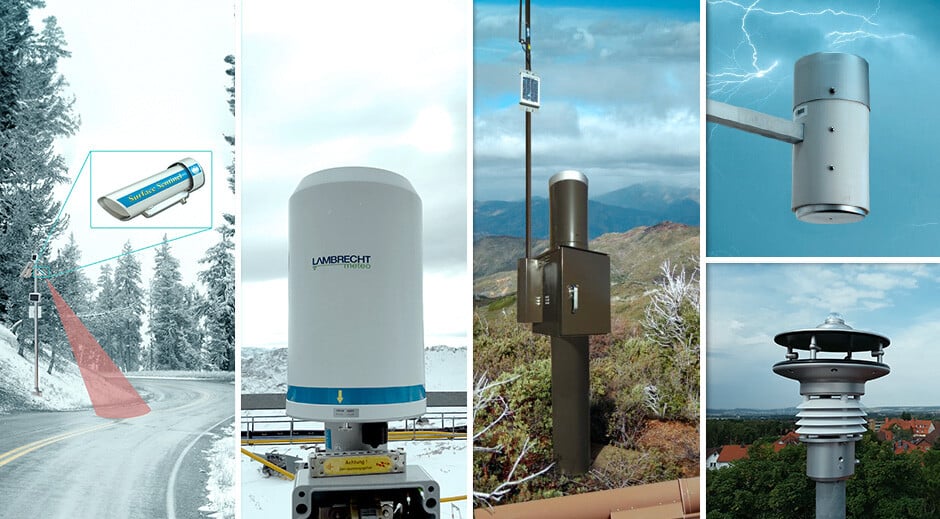
Advances in Weather Station Sensor Technology
Weather monitoring has become increasingly vital in various sectors, including agriculture, environmental research, disaster management, renewable energy, and urban planning. Accurate and timely weather data allows decision-makers to predict storms, optimize agricultural practices, manage water resources, and improve safety measures. Central to this process are weather station sensors, which continuously collect critical atmospheric data. Recent advances in sensor technology have significantly enhanced the accuracy, reliability, and functionality of modern weather stations.
Modern weather stations are equipped with highly sophisticated Weather Station Sensors capable of measuring temperature, humidity, wind speed and direction, rainfall, solar radiation, and other environmental parameters. These advancements have allowed meteorologists, researchers, and farmers to access more precise real-time data, enabling data-driven decision-making. By integrating multiple sensors and leveraging advanced electronics, today’s weather stations can provide a comprehensive understanding of local and regional weather conditions.
Table of Contents
ToggleImproved Accuracy and Sensitivity
One of the most notable advancements in weather station sensor technology is improved measurement accuracy. Modern sensors use digital processing and microelectromechanical systems (MEMS) technology to deliver highly precise readings. For instance, temperature sensors now have reduced response times and can detect minute variations in ambient temperature, while humidity sensors offer better resolution and accuracy even in extreme conditions.
Enhanced sensitivity allows weather stations to monitor microclimates effectively, providing detailed insights that were previously difficult to obtain. This precision is particularly important for agriculture, where small changes in temperature and humidity can significantly affect crop growth and yield.
Integration of Multiple Sensors
Another significant innovation is the integration of multiple sensors into a single weather station unit. Modern systems often combine temperature, humidity, wind, rainfall, and solar radiation sensors in one compact, easy-to-install device. This integration simplifies deployment and maintenance, reduces the number of separate instruments required, and ensures that data from various parameters is synchronized for better analysis.
The combination of multiple sensors also enables advanced calculations such as dew point, heat index, wind chill, and evapotranspiration rates. These derived parameters provide valuable insights for farming, energy management, and environmental monitoring, enhancing the usefulness of weather station data.
Wireless Communication and IoT Connectivity
Advances in wireless communication and the Internet of Things (IoT) have transformed how weather data is collected and used. Modern weather station sensors are capable of transmitting data wirelessly via GSM, LoRa, Wi-Fi, or satellite networks. This allows real-time monitoring of weather conditions from remote or difficult-to-access locations.
IoT connectivity also enables the integration of weather station data into automated systems. For example, irrigation systems in precision agriculture can adjust water delivery based on sensor readings, while renewable energy operations can optimize wind or solar power generation based on local conditions. Remote monitoring also reduces the need for frequent site visits, saving time and resources.
Durability and All-Weather Operation
Weather stations are often deployed in harsh environments, where exposure to extreme temperatures, wind, precipitation, and UV radiation can affect sensor performance. Advances in materials and engineering have resulted in more durable sensors capable of long-term operation with minimal maintenance. UV-resistant plastics, corrosion-resistant metals, and protective housings ensure that sensors remain accurate even under challenging environmental conditions.
Additionally, modern sensors are often self-calibrating or capable of remote recalibration, further enhancing reliability. This durability makes weather station sensors suitable for remote locations, mountainous areas, deserts, and coastal environments where maintenance is challenging.
Data Analytics and Predictive Capabilities
Modern weather station sensors are not just data collectors; they are part of larger systems that incorporate advanced analytics and predictive modeling. Machine learning and artificial intelligence algorithms can process sensor data to detect patterns, forecast weather events, and provide actionable insights. These predictive capabilities are particularly valuable for disaster management, agriculture, and urban planning.
For example, by analyzing real-time temperature, humidity, and wind data, predictive models can generate early warnings for storms, heatwaves, or frost events. Farmers can use this information to protect crops, while municipal authorities can take precautions to mitigate damage in urban areas.
Energy Efficiency and Sustainability
Advancements in sensor technology have also improved the energy efficiency of weather stations. Modern sensors consume less power, making them ideal for solar-powered or battery-operated deployments in remote areas. Low-power operation extends the lifespan of weather stations and reduces maintenance requirements, making monitoring more sustainable and cost-effective.
Conclusion
Advances in weather station sensor technology have transformed how we monitor and understand the environment. Improvements in accuracy, sensor integration, wireless communication, durability, and data analytics have made weather stations more reliable, efficient, and versatile than ever before.
Weather Station Sensors now provide precise, real-time data for agriculture, environmental research, disaster management, renewable energy, and urban planning. By leveraging these technological advancements, organizations can make informed decisions, optimize resources, and respond proactively to changing weather conditions. As sensor technology continues to evolve, weather stations will play an increasingly critical role in ensuring safety, sustainability, and operational efficiency across multiple sectors.