


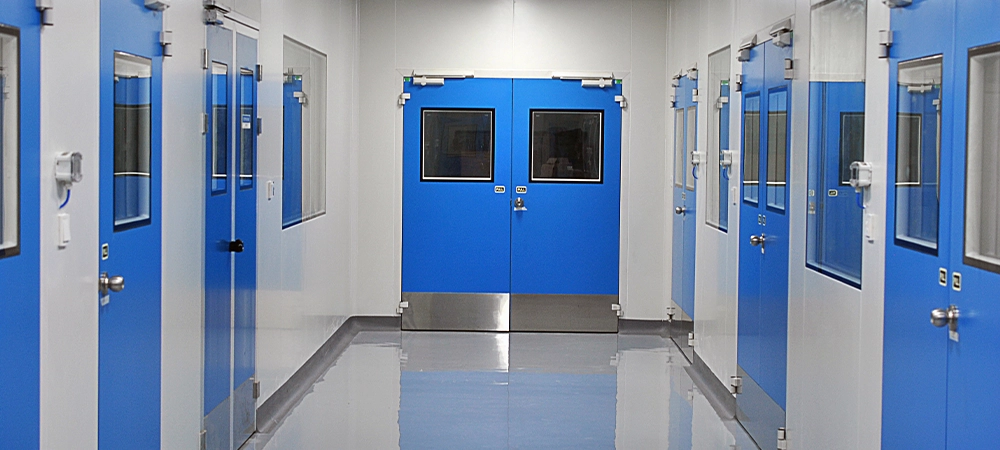
Future Trends in Turn-key Projects for Clean Room Facilities
Cleanroom facilities are becoming increasingly important across industries such as pharmaceuticals, biotechnology, semiconductors, and advanced electronics. As production technologies evolve and regulatory standards become more demanding, the way cleanrooms are designed and delivered is also changing rapidly.
Modern facilities are no longer just static controlled environments. They are becoming smarter, more flexible, and more efficient to meet the needs of fast-paced, high-precision manufacturing. This shift is strongly influencing how project delivery models are structured, especially integrated approaches.
A Turn-key Project for Clean Room is evolving alongside these industry demands, incorporating advanced technologies, modular systems, and digital tools to deliver faster, more reliable, and future-ready cleanroom solutions.
Table of Contents
ToggleRise of Smart and Digital Cleanroom Systems
One of the most significant trends shaping cleanroom development is digitalization. Cleanrooms are increasingly being equipped with intelligent monitoring and control systems that improve precision and efficiency.
Key developments include:
- Real-time environmental monitoring using smart sensors
- Automated control of temperature, humidity, and pressure
- Predictive maintenance systems for HVAC and filtration units
- Data-driven optimization of cleanroom performance
These technologies allow facilities to maintain stable conditions while reducing manual intervention and operational risk.
Integration of AI and Digital Twins
Artificial intelligence and simulation technologies are becoming more common in cleanroom engineering and management. These tools help optimize design and improve operational efficiency before construction even begins.
Emerging applications include:
- AI-assisted layout and airflow optimization
- Digital twin models for performance simulation
- Predictive analysis of equipment failures
- Automated compliance monitoring systems
By using these technologies, engineers can design more efficient systems and reduce costly design errors during construction.
Expansion of Modular and Prefabricated Construction
Modular cleanroom systems are becoming a dominant trend in modern facility development. Instead of traditional on-site construction, components are prefabricated and assembled quickly on location.
This approach offers several advantages:
- Faster installation and reduced project timelines
- Improved quality control through factory production
- Easier scalability for future expansion
- Lower contamination risk during construction
Modular systems are particularly valuable for industries that require rapid deployment and flexible production capacity.
Strong Focus on Sustainability and Energy Efficiency
Sustainability is becoming a key priority in cleanroom design and operation. Since cleanrooms consume significant energy due to continuous air circulation and filtration, improving efficiency is essential.
Future-oriented trends include:
- Energy-efficient HVAC systems with variable airflow control
- Use of low-energy filtration technologies
- Integration of renewable energy sources
- Reduced material waste through modular construction
These improvements help reduce operational costs while supporting environmental goals.
Greater Automation and Robotics Integration
Automation is transforming cleanroom operations by reducing human intervention and improving process consistency. In high-precision environments, this is especially important for minimizing contamination risks.
Key automation trends include:
- Use of robotic systems for material handling
- Automated guided vehicles (AGVs) in production zones
- Remote monitoring and control systems
- AI-driven process optimization
These technologies improve productivity while maintaining strict cleanliness standards.
Enhanced Regulatory Compliance and Digital Documentation
As regulatory requirements become more complex, digital compliance systems are playing a larger role in cleanroom projects. Future turnkey models are expected to integrate compliance management directly into the project lifecycle.
Key improvements include:
- Automated documentation for validation processes
- Digital tracking of installation and testing stages
- Real-time compliance reporting systems
- Simplified audit preparation through centralized data
This reduces administrative burden and improves transparency during inspections.
More Flexible and Scalable Cleanroom Designs
Flexibility is becoming essential as manufacturing needs change rapidly. Future cleanrooms are being designed to adapt easily to new processes and technologies.
Key design trends include:
- Expandable modular structures
- Reconfigurable cleanroom layouts
- Plug-and-play utility systems
- Multi-purpose production zones
This ensures that facilities remain relevant even as production requirements evolve.
Conclusion
The future of cleanroom development is being shaped by digital transformation, modular construction, sustainability, and automation. These trends are making facilities smarter, faster to build, and easier to operate while maintaining strict regulatory standards.
As these innovations continue to evolve, a Turn-key Project for Clean Room will play an even more important role in delivering efficient, scalable, and technologically advanced cleanroom facilities that meet the demands of modern high-precision industries.