


Benefits of Using SMD Diodes in Compact and High-Density Electronic Circuit Designs
Modern electronic devices are becoming smaller, lighter, and more powerful. From smartphones and wearable technology to industrial control systems and automotive electronics, manufacturers increasingly need components that deliver reliable performance while occupying minimal circuit board space. Surface-mount technology (SMT) has become an important part of this development because it allows electronic components to be installed directly onto printed circuit boards (PCBs) without traditional through-hole leads. Among the components commonly used in these designs, surface-mount diodes play an important role in rectification, signal control, voltage protection, and circuit regulation.
An SMD diode is designed for direct mounting onto the surface of a PCB, making it suitable for compact layouts and automated manufacturing processes. Compared with many traditional through-hole components, it generally requires less board space and supports higher component placement density. Selecting an appropriate Smd Diode can help electronics manufacturers improve assembly efficiency, optimize circuit layouts, and achieve reliable electrical performance in products where space and weight are important design considerations.
What Is an SMD Diode?
An SMD diode is a semiconductor device manufactured in a surface-mount package. It performs the same basic electrical functions as other diode types, allowing current to flow preferentially in one direction while restricting it in the opposite direction, depending on the diode’s design and operating conditions.
Unlike conventional through-hole diodes, SMD versions have compact terminals or metal contacts that are soldered directly onto PCB pads. This construction eliminates the need for long component leads passing through drilled holes in the circuit board.
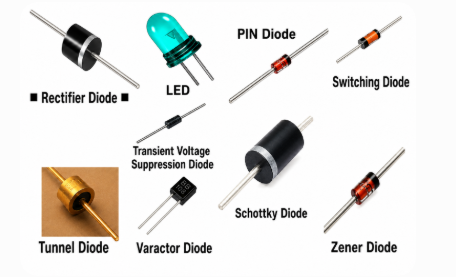
SMD diodes are available in different package sizes, current ratings, voltage ratings, and electrical configurations. Common varieties include switching diodes, rectifier diodes, Schottky diodes, Zener diodes, and transient voltage suppression (TVS) diodes.
Major Benefits of Using SMD Diodes in Compact Electronic Designs
SMD diodes offer several advantages that make them suitable for modern high-density circuit boards. Their compact construction and compatibility with automated assembly help manufacturers create smaller and more efficient electronic products.
1. Space-Saving Design
One of the most significant advantages of SMD diodes is their small physical size. Since they are mounted directly onto the PCB surface, they occupy less space than many traditional through-hole components.
This allows designers to place more components within a limited circuit board area. It is particularly useful in smartphones, portable medical equipment, wireless communication devices, and other products where internal space is restricted.
Smaller component packages also provide greater flexibility when arranging circuit paths and positioning supporting electronic components.
2. Higher Component Density
High-density electronic circuit designs require numerous components to be arranged within a relatively small area. SMD diodes support this requirement because their compact packages allow closer placement on the PCB.
A higher component density can help manufacturers reduce overall product dimensions while maintaining the required circuit functionality. However, designers must still consider electrical clearance, thermal performance, and manufacturing tolerances to prevent interference or reliability problems.
3. Compatibility With Automated Manufacturing
SMD diodes are well suited to automated PCB assembly. Pick-and-place machines can position these components accurately on solder paste-covered pads before the board passes through a reflow soldering process.
This manufacturing approach offers several benefits:
- Faster component placement.
- Consistent positioning accuracy.
- Reduced manual assembly requirements.
- Improved production repeatability.
- Better suitability for large-scale manufacturing.
Automated assembly is especially valuable for manufacturers producing large quantities of consumer electronics, communication equipment, and industrial control boards.
4. Reduced Weight
Traditional through-hole components may have longer leads and larger package structures. SMD diodes typically use smaller packages and shorter electrical connections, helping reduce the overall weight of an electronic assembly.
This advantage is important in portable devices, compact communication systems, drones, and automotive electronics. Reducing component weight can support lightweight product construction without sacrificing essential circuit functions.
5. Improved Electrical Performance in Suitable Applications
SMD diodes often have short terminal connections, which can help reduce parasitic inductance and unwanted electrical effects associated with longer component leads.
This characteristic can be beneficial in high-frequency switching circuits, signal-processing applications, and fast-response protection designs. However, actual performance depends on the diode type, package construction, PCB layout, and operating frequency.
Designers should evaluate datasheet specifications rather than assuming that every SMD diode automatically provides better electrical performance than every through-hole alternative.
Common Types of SMD Diodes
Different SMD diode types are designed to perform specific electrical functions. Choosing the correct type depends on the circuit’s voltage, current, switching speed, and protection requirements.
1. SMD Rectifier Diodes
Rectifier diodes are commonly used to convert alternating current (AC) into direct current (DC). They are found in power supply circuits, battery charging systems, and electronic equipment that requires DC power.
SMD rectifier diodes are particularly useful in compact power supply designs where PCB space is limited.
2. SMD Schottky Diodes
Schottky diodes use a metal-semiconductor junction and typically have a lower forward voltage drop than conventional silicon PN-junction diodes.
Their characteristics make them useful in:
- High-efficiency switching power supplies.
- Reverse-polarity protection circuits.
- DC-to-DC converters.
- High-speed switching applications.
Their reverse leakage current and maximum reverse voltage should be considered during component selection.
3. SMD Zener Diodes
Zener diodes are designed to operate in reverse breakdown and maintain a relatively stable voltage across their terminals within specified operating conditions.
They are commonly used for voltage references, simple regulation circuits, and voltage-clamping applications. Their compact SMD packages make them suitable for space-constrained electronic designs.
4. SMD Switching Diodes
Switching diodes are designed for applications that require rapid changes between conducting and non-conducting states.
They are used in digital circuits, signal processing, communication equipment, and switching applications where switching speed and junction capacitance are important considerations.
5. SMD TVS Diodes
Transient voltage suppression diodes protect sensitive electronic circuits from short-duration voltage spikes. They are commonly installed near connectors, communication interfaces, and power input sections.
When a transient exceeds the specified threshold, the TVS diode conducts and helps limit the voltage reaching protected components.
Applications of SMD Diodes in Modern Electronics
The small size and broad range of electrical characteristics make SMD diodes useful across many industries.
| Application | Typical diode function |
|---|---|
| Smartphones and tablets | Signal control and circuit protection |
| Power supply systems | Rectification and voltage regulation |
| Automotive electronics | Transient and reverse-polarity protection |
| Communication equipment | Signal switching and voltage clamping |
| Consumer electronics | Power management and circuit control |
| Industrial automation | Rectification and input protection |
| Wearable devices | Compact power and signal management |
In these applications, the appropriate diode type must be selected according to the electrical and environmental requirements of the complete circuit.
Important Factors to Consider When Selecting an SMD Diode
Choosing the correct SMD diode requires careful evaluation of its technical specifications. A component that fits physically may not necessarily meet the electrical requirements of the application.
1. Reverse Voltage Rating
The maximum repetitive reverse voltage indicates how much reverse voltage the diode can withstand under specified conditions. The selected rating should provide sufficient margin above the expected circuit voltage.
2. Forward Current Rating
The average and peak forward current ratings determine how much current the diode can safely conduct. Designers should consider normal operating current as well as possible transient or startup conditions.
3. Forward Voltage Drop
The forward voltage drop affects power dissipation and circuit efficiency. A lower forward voltage may be beneficial in battery-powered or energy-sensitive applications, although other specifications must also be considered.
4. Switching Speed
For high-frequency circuits, reverse recovery time and junction capacitance can influence switching performance. A diode designed for fast switching may be more suitable than a general-purpose rectifier.
5. Package Size and PCB Compatibility
SMD diodes are available in different package formats. The selected package must match the PCB footprint and manufacturing process. Designers should also ensure that the package provides adequate thermal performance.
6. Operating Temperature
Electronic products may operate in environments with significant temperature variations. The diode’s operating temperature range, leakage current, and power derating characteristics should therefore be reviewed.
SMD Diodes and Thermal Management
Although SMD diodes help reduce circuit board size, compact packages can create thermal challenges. Smaller components may have limited surface area for transferring heat into the PCB and surrounding environment.
Excessive heat can affect diode reliability, increase leakage current, and reduce operating life. Proper thermal design is therefore essential, particularly in power applications.
Designers can improve thermal performance by:
- Following the manufacturer’s recommended PCB footprint.
- Providing adequate copper area around thermal pads where applicable.
- Avoiding operation near maximum power ratings without sufficient design margin.
- Considering airflow and enclosure temperature.
- Evaluating thermal resistance and derating curves in the datasheet.
The actual heat dissipation capability depends on the package, PCB copper layout, solder connections, and surrounding operating conditions.
SMD Diodes Compared With Through-Hole Diodes
Both SMD and through-hole diodes perform important functions in electronic circuits, but their physical construction and manufacturing suitability differ.
| Feature | SMD Diodes | Through-Hole Diodes |
|---|---|---|
| Mounting method | Directly on PCB surface | Leads inserted through PCB holes |
| Component size | Generally more compact | Often larger |
| Board space | Supports dense layouts | Usually requires more space |
| Assembly | Well suited to automated placement | Often requires different assembly processes |
| Weight | Generally lower | Often higher |
| Repair and replacement | May require specialized soldering tools | Often easier to handle manually |
| Typical applications | Compact and high-density electronics | Larger assemblies and some power applications |
The best choice depends on product requirements, component availability, manufacturing capabilities, and maintenance needs.
Best Practices for Using SMD Diodes in High-Density Circuit Designs
To achieve reliable performance, engineers should consider the diode as part of the complete PCB design rather than selecting it based on size alone.
First, review the manufacturer’s datasheet to confirm the electrical ratings, package dimensions, and recommended soldering conditions. Next, create the correct PCB footprint and verify component polarity before assembly.
It is also important to provide sufficient spacing between components where electrical clearance or heat dissipation requires it. In high-speed circuits, diode placement should be optimized to minimize unwanted parasitic effects. Protection diodes, for example, are generally most effective when positioned close to the interface or circuit section they are intended to protect.
Finally, prototypes should be tested under realistic operating conditions. Checking temperature rise, voltage drop, switching behavior, and current handling can help identify potential problems before large-scale production.
Conclusion
SMD diodes provide important advantages in compact and high-density electronic circuit designs. Their small packages, reduced weight, compatibility with automated assembly, and suitability for different electrical functions make them valuable components in modern electronic products.
From rectification and voltage regulation to signal switching and transient protection, different SMD diode types support a wide range of circuit requirements. However, achieving reliable results requires careful consideration of voltage ratings, current capacity, switching characteristics, thermal performance, and PCB layout.
By selecting the right SMD diode and following sound design practices, manufacturers can develop compact, efficient, and dependable electronic systems that meet the demands of modern technology.