


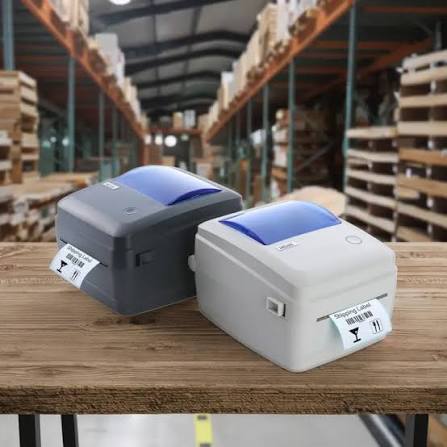
Different Types of Thermal Printers Produced by Modern Manufacturers
Thermal printing technology has become an important part of business operations across retail, logistics, healthcare, hospitality, and manufacturing industries. These printers are valued for their fast operation, clear output, and relatively simple maintenance requirements. From printing customer receipts to producing shipping labels and product barcodes, thermal printers support a wide range of commercial applications.
As printing requirements continue to diversify, manufacturers develop different types of devices to address specific operational needs. A professional Thermal Printer Manufacturer typically offers multiple models with different printing methods, sizes, connectivity options, and performance capabilities. Understanding these categories helps businesses identify suitable equipment for their applications and purchasing requirements.
Understanding the Two Main Thermal Printing Technologies
Before exploring individual printer categories, it is important to understand the two primary technologies used in thermal printing: direct thermal and thermal transfer printing.
Although both methods use heat to create printed images, they work differently and support different applications.
Direct Thermal Printers
Direct thermal printers use specially coated, heat-sensitive paper or labels. The printhead applies controlled heat to the material, creating text, graphics, and barcodes without requiring ink or a ribbon.
These printers are commonly used for:
- Retail receipts.
- Shipping labels.
- Delivery documentation.
- Queue tickets.
- Short-term product labels.
Direct thermal printing is convenient because it requires fewer consumables. However, printed materials may gradually fade when exposed to heat, sunlight, friction, or certain environmental conditions.
Thermal Transfer Printers
Thermal transfer printers use heat to transfer ink from a ribbon onto paper, synthetic labels, or other compatible materials.
This method generally produces more durable printed results than direct thermal printing, depending on the ribbon and label materials selected.
Common applications include product identification, inventory labels, industrial markings, and asset tracking.
Thermal transfer technology is particularly useful when labels need to remain readable during extended storage or handling.
1. Desktop Thermal Printers
<text> </text>
<AsyncImage query=”compact desktop thermal label printer on office desk printing labels” aspectRatio=”16:9″ width=”100%”/>
Desktop thermal printers are compact devices designed for everyday printing tasks in offices, retail stores, small warehouses, and commercial workstations.
Their smaller dimensions make them suitable for environments where available workspace is limited. Depending on the model, they may support receipt printing, barcode labels, shipping labels, or product identification.
Key characteristics include:
- Compact and space-saving construction.
- Convenient paper or label loading.
- USB and optional network connectivity.
- Suitable performance for regular business workloads.
- Relatively straightforward installation and maintenance.
Small businesses often choose desktop models because they provide practical printing capabilities without requiring large industrial equipment.
2. Industrial Thermal Printers
<AsyncImage query=”industrial heavy duty thermal transfer barcode label printer warehouse” aspectRatio=”16:9″ width=”100%”/>
Industrial thermal printers are designed for demanding environments where printing volume and operational consistency are important.
These devices are commonly installed in manufacturing plants, distribution centers, large warehouses, and logistics facilities.
Compared with many desktop models, industrial printers generally feature more robust construction, larger media capacities, and components designed for extended operation.
Important characteristics may include:
- Support for high-volume printing.
- Durable mechanical construction.
- Wider printing capabilities on selected models.
- Advanced barcode and label printing functions.
- Multiple communication interfaces.
- Compatibility with different industrial labeling applications.
Businesses should evaluate print speed, duty cycle, media capacity, and environmental requirements before selecting an industrial model.
3. Mobile Thermal Printers
<AsyncImage query=”portable handheld mobile thermal receipt printer with printed receipt” aspectRatio=”16:9″ width=”100%”/>
Mobile thermal printers are designed for employees who need printing capabilities while working away from fixed workstations.
Their compact structures and portable designs make them useful for delivery services, transportation operations, field technicians, and mobile retail activities.
Many models support wireless connections, allowing users to send printing commands from compatible smartphones, tablets, or handheld terminals.
Common applications include:
- Delivery receipts and proof-of-delivery documents.
- Mobile payment receipts.
- Field service reports.
- Transportation tickets.
- Inventory and stock identification.
Battery capacity, wireless connectivity, weight, and paper-loading convenience are important factors when evaluating portable thermal printers.
4. POS Thermal Receipt Printers
<AsyncImage query=”thermal POS receipt printer printing paper receipt retail counter” aspectRatio=”16:9″ width=”100%”/>
Point-of-sale thermal printers are widely used in supermarkets, restaurants, convenience stores, and other retail environments.
They produce transaction receipts quickly and can integrate with POS terminals and business management software.
Most POS thermal receipt printers use direct thermal technology because it eliminates the need for ink cartridges and ribbons.
Common features include automatic paper cutting, compact designs, fast printing speeds, and connectivity options such as USB or Ethernet.
Businesses selecting POS printers should consider paper width, printing speed, cutter durability, connection compatibility, and expected transaction volume.
5. Barcode Label Thermal Printers
<AsyncImage query=”thermal barcode label printer printing product barcode labels” aspectRatio=”16:9″ width=”100%”/>
Barcode thermal printers are designed to produce labels containing machine-readable codes, product information, and identification details.
They are essential for businesses that manage large inventories, track shipments, or organize products through barcode-based systems.
These printers may use direct thermal or thermal transfer technology, depending on the required label lifespan and application.
Typical uses include:
- Warehouse inventory management.
- Retail product identification.
- Shipping and logistics labels.
- Asset tracking.
- Manufacturing identification.
Print resolution is particularly important because poorly printed barcodes may become difficult for scanners to recognize.
6. Shipping and Logistics Label Printers
<AsyncImage query=”shipping thermal label printer printing courier shipping labels packages” aspectRatio=”16:9″ width=”100%”/>
Shipping label printers support businesses that process packages, deliveries, and transportation documentation.
They are frequently used by courier companies, e-commerce retailers, fulfillment centers, and warehouse operators.
These devices produce labels containing delivery addresses, tracking numbers, routing information, and shipping barcodes.
Depending on the model, they may support different label widths, printing speeds, and connectivity options.
When choosing shipping label printers, businesses should examine compatibility with shipping platforms, supported label sizes, daily printing capacity, and barcode accuracy.
7. Kiosk Thermal Printers
<AsyncImage query=”embedded kiosk thermal receipt printer self service ticket printing machine” aspectRatio=”16:9″ width=”100%”/>
Kiosk thermal printers are designed for integration into self-service machines and automated systems.
They are commonly found in parking payment terminals, ticketing machines, banking kiosks, transportation systems, and customer service terminals.
Unlike conventional desktop devices, kiosk printers are often designed as embedded printing modules that fit inside larger equipment.
Important design considerations include:
- Compact installation dimensions.
- Reliable paper feeding.
- Easy integration with electronic systems.
- Support for automatic cutting.
- Convenient maintenance access.
- Consistent operation in self-service environments.
These printers help businesses provide automated services without requiring employees to handle every transaction.
8. Wristband Thermal Printers
<AsyncImage query=”thermal wristband printer printing hospital patient identification wristbands” aspectRatio=”16:9″ width=”100%”/>
Wristband thermal printers are specialized devices used to produce identification wristbands for healthcare facilities, events, and visitor management systems.
In hospitals, printed wristbands may contain patient identification information and barcodes used in identification and administrative workflows.
Event organizers may also use them for admission control, visitor identification, and access management.
These printers are designed to work with compatible wristband materials and may include specialized feeding mechanisms.
Print clarity and barcode accuracy are especially important because the information must remain readable during normal use.
9. Color Thermal Printers
<AsyncImage query=”compact color thermal label printer printing colorful product labels” aspectRatio=”16:9″ width=”100%”/>
Color thermal printing includes specialized technologies that differ from conventional monochrome direct thermal and thermal transfer printing.
Certain color thermal systems use specially developed media or advanced printing processes to produce colored images.
These technologies may be used for product identification, promotional labels, and applications where visual differentiation is important.
Businesses should carefully evaluate the specific printing technology, supported materials, output quality, and operating costs before selecting a color thermal solution.
It is also important to distinguish specialized color thermal technologies from standard monochrome thermal printers, which typically produce black or dark printed output.
10. RFID Thermal Printers
<AsyncImage query=”industrial RFID thermal transfer label printer encoding RFID tags” aspectRatio=”16:9″ width=”100%”/>
RFID thermal printers combine label printing with radio-frequency identification encoding.
They can print visible information on labels while also writing data to compatible RFID tags embedded within those labels.
This technology supports inventory tracking, asset management, supply chain operations, and product identification.
RFID-enabled printers generally require specialized hardware and software to encode tags accurately.
Businesses should consider RFID compatibility, encoding capabilities, label specifications, software integration, and application requirements when evaluating these devices.
Factors Businesses Should Consider When Selecting a Thermal Printer Type
Understanding the different printer categories is only the first step. Businesses must also determine which device offers the right combination of performance, functionality, and operating cost.
Several factors can guide the selection process.
Printing Volume
Estimate the number of receipts, labels, or documents required each day. Desktop printers may be suitable for moderate workloads, while industrial models are more appropriate for demanding high-volume operations.
Printing Method
Choose between direct thermal and thermal transfer technology based on the required label durability, material compatibility, and operating conditions.
Print Resolution
Common resolutions include 203 DPI and 300 DPI. Higher resolution may be necessary for small text, detailed graphics, and certain barcode applications.
Connectivity Requirements
Check whether the printer supports USB, Ethernet, Bluetooth, or Wi-Fi according to your existing systems and installation environment.
Media Compatibility
Confirm that the selected model supports the required paper widths, label sizes, thicknesses, and printing materials.
Maintenance and Operating Costs
Consider consumables, replacement components, cleaning requirements, and expected maintenance expenses when comparing different models.
How Modern Manufacturers Support Different Printing Applications
Modern thermal printer manufacturing involves more than producing standard devices. Manufacturers must understand the technical requirements of different industries and develop equipment that addresses specific operational challenges.
Product development may involve improving printhead technology, refining mechanical components, optimizing firmware, and introducing more flexible connectivity options.
Some manufacturers also provide OEM and ODM services for businesses that require customized designs, private-label branding, or specialized product configurations.
Quality control remains equally important. Component inspections, assembly checks, printing tests, and final product evaluations help manufacturers maintain consistent production standards.
These capabilities allow businesses to select printing equipment according to their actual requirements rather than relying on a single general-purpose solution.
Future Developments in Thermal Printer Technology
Thermal printing continues to develop alongside changes in automation, digital commerce, and inventory management.
Wireless connectivity is becoming increasingly important as businesses adopt mobile devices and connected workstations. Improvements in printhead technology and electronic components may also support better printing accuracy and more efficient operation.
Another important development is the integration of thermal printers with cloud-based platforms and automated business systems. These connections can simplify printing management across multiple locations.
RFID-enabled printing, improved mobile printing capabilities, and more efficient industrial equipment are also expected to remain relevant as businesses modernize their operations.
Conclusion
Modern thermal printer manufacturers produce different types of equipment to support the varied printing requirements of businesses. Desktop, industrial, mobile, POS, barcode, shipping label, kiosk, wristband, color, and RFID printers each serve particular applications.
Selecting the right model requires an understanding of printing technology, daily workload, media compatibility, connectivity, resolution, and maintenance requirements.
By comparing these factors, businesses can identify equipment that fits their operational needs and budget. Understanding the different thermal printer categories also makes it easier to evaluate manufacturers and choose reliable printing solutions for long-term business use.