


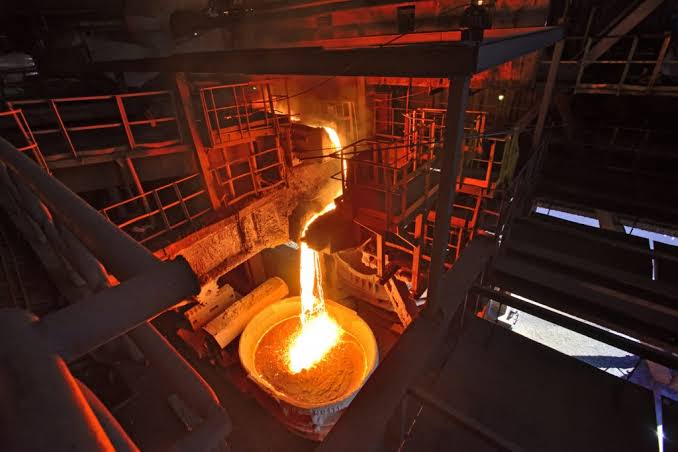
Understanding the Iron Casting Process and Its Key Manufacturing Stages
Iron casting is a widely used manufacturing process for producing metal components with different shapes, sizes, and mechanical properties. It involves melting iron, pouring the molten metal into a prepared mold, and allowing it to cool and solidify into the required shape. This process is essential in industries such as automotive manufacturing, construction, agriculture, mining, and industrial machinery production.
Although the basic principle of iron casting is straightforward, producing high-quality components requires careful control at every stage. Material preparation, mold design, melting temperature, pouring conditions, cooling, and finishing all influence the final product. An experienced Iron Castings Manufacturer uses appropriate equipment and production techniques to manufacture components that meet specific technical and performance requirements. Understanding the key manufacturing stages provides a clearer picture of how raw materials become finished industrial products.
1. Material Selection and Raw Material Preparation
The iron casting process begins with selecting suitable raw materials. The material composition must match the mechanical properties and operating conditions required for the finished component.
Common materials include gray iron and ductile iron. Gray iron is valued for its machinability and vibration-damping characteristics, while ductile iron generally offers greater tensile strength and toughness.
Raw materials may include pig iron, steel scrap, foundry returns, and selected alloying elements. Their proportions depend on the required iron grade and chemical composition.
Before melting, foundries inspect and prepare these materials to reduce contamination and maintain consistency. Proper material selection at this stage provides the foundation for reliable casting quality.
2. Pattern Design and Development
<AsyncImage query=”industrial foundry iron casting pattern tooling wooden metal pattern workshop” aspectRatio=”16:9″ width=”100%”/>
A pattern is a replica of the component used to create the mold cavity. Its dimensions and shape must account for factors such as metal shrinkage, machining allowances, and the method used to remove the pattern from the mold.
Pattern development typically involves reviewing engineering drawings and determining the most suitable design for production.
Modern foundries may use computer-aided design (CAD) software to create three-dimensional models. These models help engineers examine wall thicknesses, internal features, and geometric details before pattern production begins.
Depending on production requirements, patterns may be made from wood, plastic, metal, or other suitable materials. Accurate pattern design helps reduce dimensional errors and supports repeatable manufacturing.
3. Mold Making and Core Preparation
<AsyncImage query=”iron sand casting foundry mold preparation sand mold core manufacturing” aspectRatio=”16:9″ width=”100%”/>
The mold provides the cavity into which molten iron is poured. Sand casting is a common method for manufacturing iron components because it can accommodate a wide range of shapes and sizes.
Mold preparation involves placing the pattern into molding material and forming the required cavity. The pattern is then removed, leaving an impression that represents the component’s external shape.
Cores are used when a casting requires internal passages, cavities, or other features that cannot be formed by the main mold alone.
Important factors during mold and core preparation include:
- Sand composition and quality.
- Moisture content.
- Mold strength and permeability.
- Core dimensions and positioning.
- Venting arrangements.
- Mold alignment and stability.
A properly prepared mold helps molten metal fill the required space while reducing the risk of sand-related defects and dimensional variations.
4. Melting the Iron
<AsyncImage query=”iron foundry induction furnace melting molten iron metal industrial production” aspectRatio=”16:9″ width=”100%”/>
After preparing the raw materials and molds, the foundry melts the iron in a suitable furnace. The purpose is to produce molten metal with the required temperature and chemical composition.
Induction furnaces are commonly used in modern foundries because they provide controlled heating and can support different production requirements. Other furnace types may also be used depending on the foundry’s equipment and manufacturing process.
During melting, operators monitor important variables such as temperature and material composition. Alloying elements may be added when necessary to achieve the required grade.
Careful melting practices help maintain suitable metal properties and reduce contamination before pouring begins.
5. Chemical Composition and Molten Metal Treatment
The chemical composition of iron influences its microstructure, hardness, strength, and other performance characteristics. Therefore, checking the molten metal before pouring is an important part of the process.
Foundries use chemical analysis equipment, such as spectrometers, to measure important elements including carbon, silicon, manganese, and other alloying constituents.
Some materials also require additional molten metal treatment. For example, ductile iron production commonly involves magnesium treatment to encourage the formation of rounded graphite nodules.
The treatment process must be carefully controlled because variations can affect the final microstructure and mechanical properties.
Verifying the composition and treatment results helps ensure that the molten iron is suitable for the intended casting application.
6. Pouring Molten Iron Into the Mold
Once the molten metal reaches the required conditions, it is transferred into the prepared mold through a pouring system.
The pouring stage requires careful control because metal flow can influence mold filling, gas entrapment, oxidation, and other potential defects.
The gating system directs molten iron into the mold cavity. It generally includes features such as pouring cups, sprues, runners, and gates.
During pouring, foundry operators consider:
- Metal temperature.
- Pouring speed and consistency.
- Mold condition.
- Gating system design.
- Metal cleanliness.
- Safety procedures.
Controlled pouring helps the molten metal fill the cavity completely and reduces unnecessary turbulence.
7. Cooling and Solidification
<AsyncImage query=”freshly poured iron sand castings cooling solidification industrial foundry” aspectRatio=”16:9″ width=”100%”/>
After pouring, the molten iron begins to cool and solidify inside the mold. During this stage, the metal changes from a liquid state into a solid component that follows the shape of the mold cavity.
Cooling conditions influence the casting’s microstructure, mechanical properties, and dimensional stability. Thick and thin sections may cool at different rates, so manufacturers must consider the component’s geometry and solidification behavior.
Risers provide additional molten metal to compensate for volume changes during solidification. Chills may also be used in selected areas to control cooling rates.
Allowing sufficient cooling time is important because removing a casting too early can cause deformation, cracking, or other problems.
8. Shakeout and Casting Removal
Once the casting has cooled sufficiently, it is removed from the mold. This stage is commonly called shakeout.
In sand casting, the mold is broken apart or mechanically separated to release the solidified component. The sand may then be collected, processed, and reused where suitable.
After removal, the casting may still contain attached sand, gates, runners, and risers. These materials must be separated during subsequent cleaning and finishing operations.
Proper shakeout procedures help prevent unnecessary damage to the casting while preparing it for further processing.
9. Cleaning and Surface Preparation
<AsyncImage query=”industrial foundry workers cleaning iron castings shot blasting metal components” aspectRatio=”16:9″ width=”100%”/>
After shakeout, the casting undergoes cleaning to remove sand, scale, and other unwanted surface materials.
Depending on the component and production requirements, cleaning methods may include:
- Shot blasting.
- Sand blasting.
- Mechanical brushing.
- Grinding.
- Surface trimming.
- Removal of gates and risers.
Shot blasting is commonly used to remove residual sand and surface scale. Grinding and other finishing operations help eliminate sharp edges and unwanted material around the casting.
The cleaning process prepares the component for inspection and any additional machining requirements.
10. Heat Treatment When Required
Some iron castings undergo heat treatment to modify their microstructure or improve specific mechanical properties. The appropriate treatment depends on the material grade and intended application.
Common heat treatment processes include annealing, normalizing, and stress relieving.
Annealing may improve machinability in certain materials, while stress relieving helps reduce residual stresses that can develop during casting and cooling.
Heat treatment is not necessary for every iron casting. Manufacturers select it according to the required material properties, dimensional stability, and engineering specifications.
11. Machining and Dimensional Finishing
<AsyncImage query=”CNC milling machine machining heavy gray iron casting industrial component” aspectRatio=”16:9″ width=”100%”/>
Many cast iron components require machining to achieve precise dimensions, surface finishes, and functional features.
CNC milling, turning, drilling, and boring are commonly used to finish mounting surfaces, holes, threads, and other areas that must fit accurately into machinery assemblies.
The machining stage depends on the casting’s material properties, hardness, geometry, and required tolerances.
Manufacturers must also consider machining allowances during the original pattern design. Sufficient material must remain in designated areas so that the final component can meet its dimensional specifications.
12. Quality Inspection and Testing
Quality inspection confirms whether the finished casting meets the required technical and performance standards. Inspection may take place at different stages, including after shakeout, cleaning, heat treatment, and machining.
Common testing and inspection methods include:
Visual inspection: Identifies visible defects such as cracks, surface cavities, and irregularities.
Dimensional inspection: Uses gauges, measuring instruments, or coordinate measuring machines to verify component dimensions.
Chemical composition testing: Confirms that the material contains the required elements in appropriate proportions.
Hardness testing: Measures resistance to localized indentation.
Tensile testing: Evaluates strength and elongation when specified.
Metallographic examination: Studies graphite structure and the metal’s microstructure.
Non-destructive testing: Uses methods such as ultrasonic, radiographic, or magnetic particle testing when appropriate.
The inspection plan should be based on the component’s application, customer requirements, and relevant material standards.
13. Packaging and Final Delivery
After completing production and inspection, the castings are prepared for delivery. Packaging requirements depend on component size, weight, surface condition, and transportation conditions.
Machined surfaces may need protective treatments to reduce the risk of corrosion during storage or shipment. Heavy components may require suitable lifting arrangements and protective packaging to prevent handling damage.
Manufacturers should also organize relevant documentation, such as material reports, inspection records, and production identification details when required.
Proper packaging and documentation help ensure that products reach customers in suitable condition and can be identified throughout the supply chain.
Factors That Influence the Quality of Iron Casting
Although each manufacturing stage has a specific purpose, the final quality of an iron casting depends on how effectively these stages work together.
Several factors have a particularly strong influence on production results:
- Material composition: Determines the basic properties and microstructure of the finished casting.
- Pattern accuracy: Influences dimensional consistency and mold geometry.
- Mold quality: Affects surface condition, metal flow, and dimensional stability.
- Pouring temperature: Influences mold filling and solidification behavior.
- Cooling conditions: Affect microstructure, residual stress, and dimensional stability.
- Finishing operations: Help achieve the required surface condition and final dimensions.
- Quality inspection: Verifies that the casting meets the agreed specifications.
Controlling these factors throughout production helps reduce defects and improve manufacturing consistency.
The Role of Modern Technology in Iron Casting
Modern technology is improving several stages of the iron casting process. CAD software helps engineers develop accurate component designs, while casting simulation provides information about mold filling and solidification.
Automated melting and pouring equipment can improve process repeatability. Digital monitoring systems help track important production conditions, and advanced inspection tools support more detailed quality verification.
Additive manufacturing is also being used in some foundries to produce complex sand molds and cores directly from digital designs. This can be particularly useful for prototype development and specialized components.
Technology works best when combined with experienced engineers, skilled operators, and established quality management procedures.
Conclusion
The iron casting process involves several interconnected manufacturing stages, beginning with material selection and pattern development and continuing through mold preparation, melting, pouring, cooling, cleaning, machining, and final inspection. Each stage contributes to the dimensions, mechanical properties, and overall quality of the finished component.
Careful control of materials, temperatures, mold conditions, and production procedures helps manufacturers reduce defects and achieve consistent results. By understanding these manufacturing stages, industrial buyers and engineers can better evaluate casting products, communicate technical requirements, and select components suited to their intended applications.