


The Core Responsibilities of an Interior Designer Explained
Many people think design work starts with colours, furniture, and decoration. That is only one part of it. The main job is to make sure a space works properly before it is made to look finished. That includes how people move through the room, how light supports daily tasks, where storage is placed, and whether the layout suits real habits. If these practical parts are ignored, even an attractive room can feel inconvenient, uncomfortable, or poorly planned over time.
An interior designer begins by understanding how the room will be used. This includes who uses it, what activities happen there, how often it is used, and what problems already exist. A family kitchen, for example, needs a different setup from a formal dining area. A home office needs different planning from a guest bedroom. Without this first step, the rest of the decisions are based on guesswork.
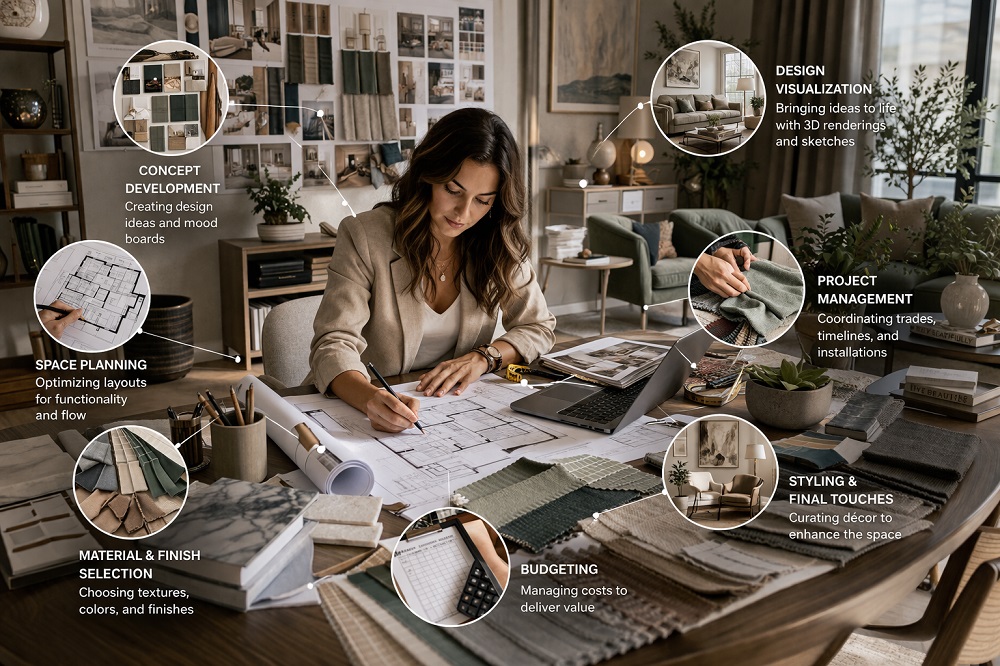
The next responsibility is planning the layout. This means deciding where major items should go and how people will move through the room. Good layout planning avoids blocked walkways, awkward furniture placement, and wasted space. It also helps the room feel more comfortable in daily use. At this stage, an interior designer is focused more on function than appearance.
Material selection is another important part of the work. Floors, wall finishes, worktops, fabrics, and fittings all need to suit the way the space will be used. A material that looks attractive may not perform well in a busy household or commercial setting. The right choice depends on durability, cleaning needs, and long-term wear, not just visual effect. An interior designer has to judge both style and practicality at the same time.
Lighting is also a core responsibility. A room usually needs more than one type of lighting. General lighting helps people see clearly. Task lighting supports specific activities such as reading, cooking, or working. Accent lighting adds focus to certain areas. A proper lighting plan considers brightness, position, and how the room is used at different times of day. Without this, even a well-furnished space can feel uncomfortable.
Storage planning is often part of the job as well. This includes deciding what needs to be stored, how often it is accessed, and where it should be placed. Poor storage planning leads to clutter, visible mess, and rooms that are harder to use. Good storage planning makes the room easier to manage and keeps the design clean.
Technical coordination is another major responsibility. Design decisions have to work with electrical points, plumbing, heating, ventilation, and structural limitations. If these are ignored early, changes later can become expensive and difficult. An interior designer often works with builders, electricians, and other trades to make sure the design can actually be carried out as planned.
The work also continues during implementation. Drawings, specifications, and product selections need to be followed accurately. If measurements are wrong or materials are substituted without proper review, the final result can lose quality. This is why site checks and coordination matter. An interior designer helps keep the project aligned with the original plan.
Aesthetic decisions still matter, but they are not separate from function. Furniture, colours, textures, and decorative elements should support how the space works. A room should not only look finished. It should also be comfortable, practical, and suitable for regular use. That balance is a key part of the job.
The role covers planning, coordination, selection, and oversight. It is not limited to making a room look attractive. It is about organising many connected decisions so the final space works properly from both a practical and visual point of view.