


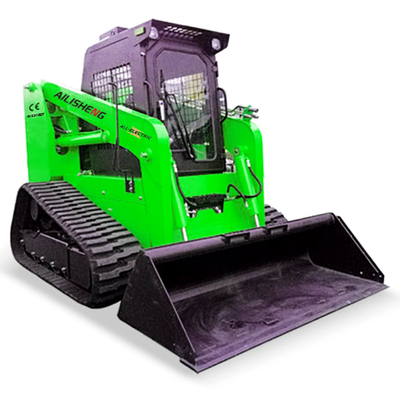
How to Evaluate Warranty and After-Sales Support from an Electric Skid Steer Loaders Supplier
How to Evaluate Warranty and After-Sales Support from an Electric Skid Steer Loaders Supplier
Electric skid steer loaders are valuable investments for construction companies, landscaping businesses, warehouses, and industrial operations. Although these machines can offer advantages such as reduced operating noise and lower local emissions, their long-term performance depends on more than initial product quality. Warranty coverage and after-sales support are equally important because they influence maintenance costs, repair times, and overall equipment reliability.
When choosing an Electric Skid Steer Loaders Supplier, buyers should carefully evaluate the support available after the purchase. A supplier may offer attractive pricing and impressive specifications, but unclear warranty conditions or limited access to replacement parts can create operational challenges later. Understanding how to assess these services helps businesses make informed purchasing decisions and protect their equipment investment.
1. Understand the Warranty Coverage in Detail
The first step is to review the warranty document rather than relying solely on verbal assurances or general statements in a product brochure. A warranty defines the supplier’s or manufacturer’s responsibilities when covered components develop qualifying defects during the specified period.
Check which parts of the electric skid steer loader are included. Coverage may differ for the battery, electric motor, electronic controller, hydraulic system, structural components, and charging equipment. Some components may have separate warranty periods or additional conditions.
You should also identify exclusions, such as damage caused by misuse, unauthorized modifications, improper maintenance, or normal wear and tear. Ask for clarification if any wording is unclear.
A reliable supplier should provide written warranty terms before you place an order. Reviewing these terms in advance helps you understand the protection available and reduces the risk of disagreements if a problem occurs.
2. Check the Warranty Period for Major Components
Not every component necessarily has the same warranty duration. Battery systems, electric motors, controllers, and hydraulic components may be subject to different coverage periods depending on the manufacturer and product configuration.
Ask the supplier to specify the warranty duration for each major component. Confirm when coverage begins, whether it is based on the delivery date or another documented event, and whether operating-hour limits apply.
For battery-powered equipment, pay particular attention to battery coverage. Determine whether the warranty addresses manufacturing defects, capacity loss, or other specified performance issues. Do not assume that every form of battery degradation is covered.
Comparing these details across suppliers gives you a clearer picture of the protection included with each machine. A longer warranty is not automatically better if it contains significant exclusions or difficult claim requirements.
3. Evaluate the Warranty Claim Process
A warranty is only useful when customers can understand and follow the claim process. Before purchasing, ask the supplier how a claim should be submitted and what information is required.
Find out whether you need to provide the machine’s serial number, proof of purchase, maintenance records, photographs, diagnostic information, or a technician’s inspection report. You should also understand who determines whether a fault qualifies for warranty coverage.
Important questions include:
- How should customers report a technical problem?
- How quickly does the supplier normally acknowledge a claim?
- Who assesses the fault and approves warranty repairs?
- Are repairs completed locally or at another service facility?
- What happens if a replacement component is unavailable?
- Who pays for labor, shipping, transportation, or diagnostic work?
Ask for these procedures in writing whenever possible. Clear documentation can make the process more straightforward if a machine develops a problem during the warranty period.
4. Assess the Availability of Technical Support
Technical support helps operators and maintenance teams resolve problems before they cause extended downtime. Electric skid steer loaders combine mechanical, hydraulic, and electrical systems, so troubleshooting may require specialized knowledge.
Ask what support channels the supplier offers. These may include telephone assistance, email, online communication, remote troubleshooting, service documentation, or on-site technical visits.
It is also important to understand the support team’s expertise. Can its representatives help diagnose battery warnings, controller faults, charging issues, hydraulic problems, and routine maintenance questions? Does the supplier have qualified technicians or authorized service partners?
If you are buying equipment from an overseas supplier, confirm the time zone, language availability, and process for arranging technical assistance. Support that is accessible and responsive can help your team identify problems more efficiently.
5. Verify Spare Parts Availability and Delivery Times
Spare parts availability is one of the most practical indicators of after-sales support quality. Even a reliable machine may need replacement components because of normal wear, accidental damage, or electrical and mechanical faults.
Ask which parts the supplier keeps in stock and which must be ordered from the factory. Common maintenance items may include filters, tires, hydraulic components, connectors, sensors, and other model-specific parts.
For electric equipment, also ask about the availability of specialized electrical components, controllers, charging accessories, and battery-related replacement parts.
Request realistic lead-time estimates and information about the ordering process. For international purchases, confirm shipping methods, associated charges, and any import requirements. If your business relies heavily on the loader, consider keeping essential consumables or recommended replacement items available on-site.
6. Examine Battery Warranty and Battery Service
The battery is a major component of an electric skid steer loader and can have a substantial influence on equipment availability. Evaluating battery support therefore deserves particular attention.
Ask the supplier about the battery’s warranty duration, covered defects, capacity-related conditions, and required maintenance practices. Clarify whether the warranty covers only manufacturing defects or also includes specific capacity-retention thresholds under defined conditions.
You should also request guidance on correct charging, storage, temperature limits, and long-term battery care. Improper charging or storage can affect battery performance and may influence warranty eligibility, depending on the applicable terms.
Find out whether the supplier can help diagnose charging faults or battery-management-system alerts. If replacement becomes necessary, confirm the availability of compatible batteries, installation requirements, and any commissioning procedures.
A clear battery support policy helps businesses plan for maintenance and better understand potential long-term ownership costs.
7. Review Maintenance Guidance and Operator Training
Preventive maintenance can reduce avoidable failures and extend the useful life of equipment. A dependable supplier should provide the information needed to operate and maintain the loader correctly.
Ask whether the purchase includes an operator manual, maintenance schedule, troubleshooting guide, parts catalog, and safety instructions. These documents should match the exact machine model and configuration you intend to buy.
Training is another important consideration. Operators should understand the machine’s controls, load limits, safe operating procedures, battery charging requirements, and daily inspection routines. Maintenance personnel may need additional guidance on hydraulic servicing and electrical safety.
Confirm whether training is included in the purchase price or available at an additional cost. For businesses with multiple operators, standardized training and accessible documentation can help reduce operating errors and improve consistency.
8. Understand Repair Costs Outside the Warranty
Warranty coverage does not eliminate every repair expense. Damage caused by excluded events, routine wear, or faults outside the coverage period may be the owner’s responsibility.
Ask the supplier how repairs are priced when warranty coverage does not apply. Find out whether diagnostic fees, technician labor, replacement parts, transportation, and travel expenses are charged separately.
You should also ask whether the supplier provides a recommended maintenance schedule and estimates for common service tasks. While exact future repair costs cannot be guaranteed, this information can help you build a more realistic equipment budget.
Comparing these costs across suppliers can reveal differences that are not obvious from the initial purchase price. A slightly more expensive machine may offer better value if its maintenance arrangements, parts availability, and technical support are more suitable for your operation.
9. Check Local Service Networks and International Support
The value of after-sales support depends partly on where and how it is delivered. A supplier with a local service center may be able to arrange inspections and repairs more conveniently than one that relies entirely on remote assistance.
Ask whether the supplier operates service facilities in your region or works with authorized technicians and distributors. Confirm which services they can provide, whether they can handle electrical and hydraulic repairs, and how service appointments are arranged.
For international purchases, establish who is responsible for warranty coordination and technical communication. Clarify whether you must return components, send diagnostic information, or arrange service through a local partner.
If local support is limited, ask about remote diagnostics, detailed repair documentation, replacement-part shipments, and technician training. Understanding these arrangements before purchasing helps you prepare for situations in which professional assistance is required.
10. Evaluate Supplier Reputation and Customer Feedback
Customer experiences can provide useful insight into the quality of a supplier’s after-sales service. Look for reviews, customer references, and case studies that discuss equipment reliability, warranty handling, parts delivery, and technical assistance.
When possible, speak with customers who operate similar machines in comparable working conditions. Ask how the supplier responded when a component failed, whether warranty claims were handled clearly, and how long replacement parts took to arrive.
Pay attention to recurring patterns rather than relying on one positive or negative comment. A single complaint may not represent the supplier’s overall performance, but repeated reports of delayed responses or unresolved claims deserve attention.
You can also assess how the supplier handles questions before the sale. Transparent answers and complete documentation may indicate a more organized approach to customer support, although they do not guarantee future service quality.
11. Compare After-Sales Support Between Suppliers
When reviewing several suppliers, use the same criteria for each one. This makes it easier to identify meaningful differences and avoid choosing based on price alone.
Consider comparing the following factors:
| Evaluation factor | Questions to ask |
|---|---|
| Warranty duration | How long is each major component covered? |
| Warranty exclusions | Which faults or operating conditions are excluded? |
| Claim process | What documentation is required, and who approves claims? |
| Technical support | Which communication channels and troubleshooting services are available? |
| Spare parts | Which parts are stocked, and what are the expected lead times? |
| Battery service | What battery faults and performance conditions are covered? |
| Maintenance guidance | Are manuals, schedules, and training provided? |
| Repair costs | What charges apply outside the warranty? |
| Service network | Are local technicians or authorized service partners available? |
| Customer reputation | Can the supplier provide verifiable customer references? |
You can assign importance to each factor according to your operating requirements. For example, a business using its loader every day may prioritize quick access to spare parts and technical support, while a smaller operation may place greater emphasis on warranty coverage and predictable maintenance costs.
12. Get All Support Commitments in Writing
Before confirming an order, ensure that important promises are included in the quotation, warranty document, purchase agreement, or another formal written record.
The documentation should identify the exact machine model, included components, warranty periods, claim procedures, technical support arrangements, and any additional service packages. If the supplier promises specific training, replacement-part arrangements, or delivery conditions, request written confirmation.
Avoid relying entirely on informal messages or verbal statements when the commitment could affect your costs or equipment availability. Written terms provide a clearer reference if questions arise later.
It is also wise to retain invoices, serial numbers, maintenance records, service reports, and correspondence throughout the ownership period. Keeping these documents organized can make warranty claims and routine service requests easier to manage.
Common Warning Signs to Watch For
Certain warning signs deserve additional investigation before you select a supplier:
- Unclear warranty terms: The supplier cannot explain coverage, exclusions, or claim procedures.
- Unsupported service promises: Response times or repair guarantees are offered without clear written conditions.
- Limited parts information: The supplier cannot identify replacement-part ordering procedures or provide realistic lead times.
- Poor technical communication: Questions about battery systems, electrical faults, or maintenance receive vague answers.
- Missing documentation: Manuals, warranty certificates, or essential product records are unavailable.
- No clear repair arrangements: It is difficult to determine who will diagnose or repair the machine after delivery.
These issues do not automatically prove that a supplier is unreliable, but they should be resolved before making a significant equipment investment.
Conclusion
Evaluating warranty and after-sales support is an essential part of purchasing an electric skid steer loader. Buyers should examine warranty coverage for major components, understand the claim process, verify battery support, and assess the availability of technical assistance and replacement parts.
Maintenance guidance, operator training, repair costs, local service options, and customer feedback also contribute to a more complete assessment. Most importantly, warranty conditions and service commitments should be documented clearly before the order is confirmed.
By comparing suppliers on these practical criteria, businesses can reduce uncertainty, prepare for maintenance requirements, and select equipment backed by support that matches their operational needs. A dependable after-sales arrangement can be just as important as the machine itself when it comes to maintaining productivity over the long term.