


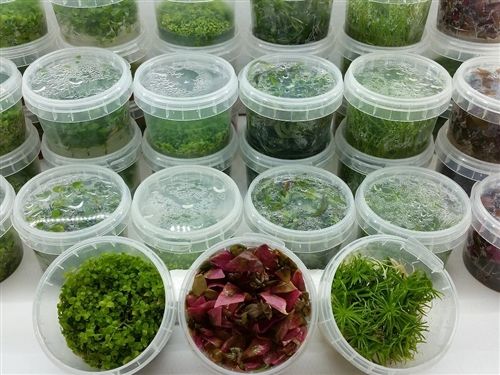
How Wholesale Tissue Culture Plants Improve Large-Scale Plant Production
Large-scale plant production requires consistency, speed, and high survival rates to remain profitable in competitive agricultural markets. Traditional propagation methods often struggle to meet these demands due to variability in plant quality and susceptibility to disease. Tissue culture technology has emerged as a reliable solution that supports uniform production and efficient scaling for commercial growers.
Modern growers increasingly rely on controlled propagation systems to ensure that every plant meets strict quality standards. This approach not only improves output but also reduces long-term production risks associated with pests, climate sensitivity, and inconsistent genetic traits. As demand for high-quality planting material grows globally, tissue culture has become a central part of commercial horticulture strategies.
For growers seeking reliable sourcing options, Wholesale Tissue Culture Plants provide a practical solution that supports consistent production cycles while maintaining high plant uniformity and health standards. By integrating tissue culture material into large-scale farming systems, producers can stabilize their supply chains and improve overall operational efficiency.
Table of Contents
ToggleConsistent Quality Across Large Production Cycles
One of the most significant advantages of tissue culture plants is their uniformity. Since all plants are cloned from selected parent material under sterile laboratory conditions, they maintain identical genetic characteristics. This ensures consistent growth rates, size, and yield performance across entire plantations.
For commercial growers, this consistency translates into:
- Predictable harvesting schedules
- Standardized product quality for market supply
- Reduced variability in field performance
Such uniformity is especially valuable in industries like fruit farming, ornamental plant production, and export agriculture, where market expectations are strict.
Enhanced Disease Resistance and Plant Survival
Disease management is a major concern in large-scale agriculture. Tissue culture propagation significantly reduces the risk of introducing pathogens into production systems because plants are developed in sterile environments. This controlled process helps eliminate many common viral, bacterial, and fungal infections at the source.
Key benefits include improved field survival rates and reduced dependency on chemical treatments. With healthier plants from the beginning, growers can establish stronger plantations and reduce losses during early growth stages. This contributes to more stable production cycles and lower maintenance costs over time.
Faster Scaling for Commercial Operations
Large-scale growers often face pressure to expand production quickly in response to market demand. Tissue culture makes rapid scaling possible by enabling mass propagation within a short time frame. Unlike traditional methods that rely on seasonal cycles or limited mother plants, tissue culture laboratories can continuously produce planting material.
This allows growers to:
- Expand plantation areas efficiently
- Respond quickly to market demand fluctuations
- Maintain continuous production schedules
As a result, businesses can grow their operations without compromising quality or consistency.
Improved Resource Efficiency and Cost Management
Although tissue culture plants may require a higher initial investment, they offer significant long-term cost advantages. Higher survival rates reduce the need for repeated planting, and healthier crops require fewer chemical inputs.
Over time, growers benefit from:
- Reduced pesticide and fertilizer usage
- Lower replanting and maintenance costs
- Improved yield efficiency per cultivation area
These factors make tissue culture an economically sustainable option for commercial agriculture, particularly for high-value crops.
Better Adaptation and Field Performance
Tissue culture plants are carefully acclimatized before being introduced into open environments, which improves their adaptability. Once transferred to field conditions, they establish quickly and demonstrate strong early growth compared to conventionally propagated plants.
This improved adaptation leads to:
- Stronger root development
- Faster establishment in soil
- Higher resistance to environmental stress
Such performance advantages are critical in large-scale farming, where even small improvements in survival rates can significantly impact overall productivity.
Support for Sustainable Agricultural Practices
Sustainability has become a key focus in modern agriculture, and tissue culture contributes positively to this goal. Because plants are healthier and more uniform, growers can minimize chemical usage and reduce environmental impact.
Sustainable advantages include:
- Lower reliance on pesticides and fungicides
- Reduced soil contamination risks
- More efficient use of agricultural inputs
This aligns with global trends toward environmentally responsible farming while maintaining high productivity levels.
Conclusion
Wholesale tissue culture technology plays a vital role in improving large-scale plant production systems. From enhanced disease resistance and uniform growth to faster scaling and improved cost efficiency, its benefits extend across every stage of commercial farming.
As agricultural demands continue to increase, adopting tissue culture methods allows growers to maintain competitiveness while ensuring sustainability and long-term productivity. By integrating high-quality planting material into their operations, commercial producers can build more reliable and efficient production systems for the future.