


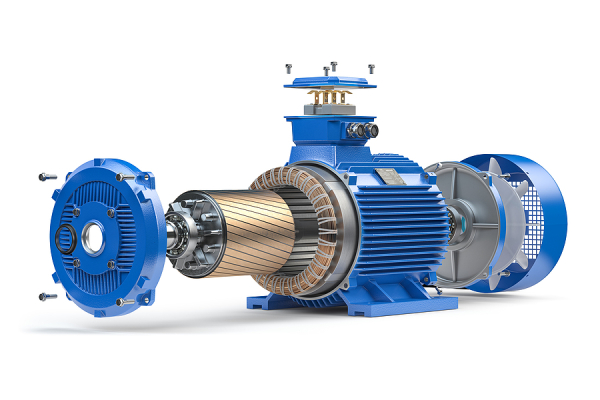
Solid Shaft Design and Its Role in Heavy-Duty Mechanical Systems
Heavy-duty machinery is expected to operate under demanding conditions, often for long periods and with limited tolerance for unexpected stoppages. Conveyors, crushers, industrial mixers, large pumps, and material-handling equipment all depend on rotating components that can withstand significant mechanical loads. In many of these systems, a solid shaft provides a straightforward and robust means of carrying torque and supporting attached parts.
A Solid Shaft is a continuous shaft with a substantially solid cross-section through its working length, rather than a central bore intended to reduce material or accommodate another component. Its design can offer useful stiffness and a simple manufacturing route, but strength is not determined by solidity alone. Diameter, length, material, support arrangement, surface features, and operating loads all influence performance.
Why Solid Shafts Remain Widely Used
A solid shaft can be relatively simple to manufacture from bar stock or a forged blank. It can accommodate shoulders, bearing journals, keyways, splines, threads, and other features needed to connect rotating components. For many standard industrial applications, this makes it a practical and familiar design choice.
Its continuous section may also provide useful resistance to bending and torsion. However, a hollow shaft with an appropriately selected outside diameter can sometimes provide a more favorable strength-to-weight ratio. The choice between solid and hollow construction should therefore be based on engineering calculations and the constraints of the machine.
Understanding the Main Mechanical Loads
A shaft transmitting power experiences torsional stress. If a pulley, gear, or other component applies a force away from a bearing support, the shaft also experiences bending. Axial forces may arise from helical gears, pump impellers, thrust mechanisms, or other connected equipment.
These loads can occur simultaneously. A shaft that is adequate for pure torsion may be unsuitable when bending and shock loads are included. Engineers should evaluate the complete load combination and identify locations where stresses are likely to be highest.
Starting torque, reversing, sudden stoppages, and repeated load cycles can also influence fatigue life. Heavy-duty equipment may experience variable resistance as material enters a crusher or mixer, making peak loading an important design consideration.
Diameter, Length, and Stiffness
Increasing shaft diameter generally improves resistance to bending and torsional deformation, but it also increases mass and rotational inertia. A longer shaft may require additional support to limit deflection and vibration.
Bearing locations and the spacing between supports influence the bending moment distribution. Overhung components, such as large pulleys or sprockets, can place substantial loads on the shaft and bearings. Where possible, positioning the load closer to a support can reduce bending effects.
The designer must also consider critical speed. A shaft that is sufficiently strong under static calculations may still experience excessive vibration if its operating speed approaches a natural bending frequency.
Material Selection for Demanding Service
Carbon steel is commonly used for general industrial shafts. Alloy steels may be chosen where greater strength, toughness, or fatigue resistance is needed. Stainless steel can be useful in corrosive environments, although grade selection must balance corrosion resistance with mechanical requirements.
Heat treatment may improve strength or wear resistance. The selected process should be compatible with the shaft’s dimensions and geometry. Distortion after treatment can affect bearing seats and alignment, so finishing operations may be required.
Manufacturing and Surface Features
Solid shafts may be produced by turning, forging, grinding, milling, drilling, and other machining operations. Critical surfaces include bearing journals, coupling seats, and locations where gears or hubs are fitted.
Keyways and cross-holes create local stress concentrations. Their dimensions and positions should be selected carefully, and transitions should be designed to avoid unnecessary sharp corners. Surface finish is important at bearing and sealing interfaces because roughness can contribute to wear or leakage.
Heavy-Duty Applications
Solid shafts are found in industrial gearboxes, conveyor drives, crushers, presses, pumps, mixers, and agricultural machinery. In each application, the shaft must be assessed against the actual torque, speed, load direction, contamination, and operating cycle.
For example, a conveyor drive shaft may experience continuous torque with occasional starting peaks, while a crusher shaft may encounter repeated shock loads. These differences can lead to different material and dimensional requirements even when nominal power ratings are similar.
Inspection and Service Life
Inspection should cover straightness, runout, surface damage, cracks, corrosion, and wear at fitted interfaces. Vibration monitoring can help identify developing problems in the rotating assembly. Lubrication and bearing condition should also be checked because bearing failure can impose abnormal loads on an otherwise sound shaft.
Conclusion
Solid shaft design remains important in heavy-duty mechanical systems because it offers a versatile and well-established way to transmit power and support rotating components. Reliable performance depends on calculating combined loads, selecting suitable materials, controlling geometry, and considering vibration and fatigue. A properly engineered solid shaft can provide long service in demanding equipment without unnecessary complexity.