


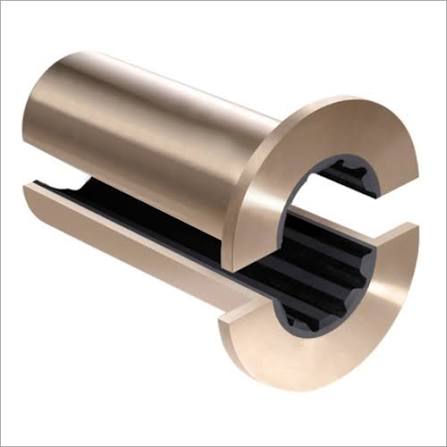
The Role of Marine Bearing Suppliers in Improving Vessel Efficiency and Reliability
Vessel efficiency and mechanical reliability are essential for successful marine operations. Ships depend on numerous rotating systems, including propulsion equipment, pumps, compressors, and auxiliary machinery, to function continuously under demanding conditions. Marine bearings play an important role in these systems by supporting rotating shafts, reducing friction, and maintaining mechanical stability.
Choosing dependable Marine Bearing Suppliers can significantly influence the performance and service life of marine equipment. Beyond providing replacement components, experienced suppliers contribute through material selection, manufacturing precision, technical guidance, and consistent product quality. Their support helps shipowners and marine engineers maintain reliable machinery while controlling operational and maintenance costs.
Understanding the Importance of Marine Bearings
Marine bearings are designed to support mechanical movement and manage loads within different vessel systems. They help maintain shaft alignment, minimize friction, and reduce unnecessary wear between moving components.
These bearings are commonly used in propulsion shafts, rudder systems, marine pumps, generators, and other onboard equipment. Each application requires specific bearing characteristics based on operating speed, load capacity, lubrication conditions, and environmental exposure.
When appropriately selected and maintained, marine bearings contribute to smoother machinery operation and more predictable equipment performance.
Reducing Friction to Improve Vessel Efficiency
Friction is a major consideration in mechanical systems because excessive resistance can increase energy consumption and generate unwanted heat. Marine bearings help reduce friction between moving surfaces, allowing rotating equipment to operate more efficiently.
Suitable bearing designs can support smooth shaft movement while maintaining appropriate load distribution. This is particularly important in propulsion systems, where mechanical efficiency influences power transmission and overall vessel performance.
The correct bearing material, surface finish, lubrication arrangement, and operating clearance all contribute to reducing friction-related problems.
Supporting Reliable Propulsion Systems
A vessel’s propulsion system must operate consistently to maintain speed, maneuverability, and operational reliability. Bearings support propeller shafts and help maintain their alignment during continuous rotation.
If a bearing experiences excessive wear, misalignment, or inadequate lubrication, it can contribute to vibration, heat generation, and mechanical damage.
Suppliers support propulsion system reliability by helping customers select bearings that match shaft dimensions, expected loads, rotational speeds, and operating environments.
Proper product selection reduces the risk of premature failure and helps maintain stable propulsion performance.
Improving Equipment Durability Through Material Selection
Marine environments present several challenges for mechanical components. Saltwater, humidity, changing temperatures, and continuous exposure to vibration can affect bearing durability.
Professional suppliers offer different material options according to application requirements. These may include bronze alloys, stainless steel, engineered polymers, and other specialized materials.
Important material characteristics include:
- Corrosion resistance in marine environments.
- Strength under radial and axial loads.
- Resistance to friction and surface wear.
- Compatibility with lubrication systems.
- Stability under expected operating temperatures.
Selecting appropriate materials helps improve bearing service life and reduces the likelihood of unexpected component deterioration.
Minimizing Maintenance Requirements and Equipment Downtime
Unexpected machinery failures can interrupt vessel operations and create significant maintenance expenses. Bearing-related problems may require equipment shutdowns, inspections, repairs, and component replacement.
Reliable suppliers help reduce these risks by providing products manufactured according to appropriate technical specifications and quality requirements.
They may also offer product documentation, installation recommendations, and maintenance guidance. This information helps marine engineers identify suitable components and follow appropriate maintenance procedures.
Regular bearing inspections, proper lubrication, and timely replacement remain essential for preventing avoidable equipment problems.
Providing Technical Expertise for Better Bearing Selection
Marine machinery varies considerably between vessels, making technical knowledge an important part of supplier support.
An experienced supplier should understand the operating requirements of different applications and help customers evaluate suitable bearing designs.
Technical assistance may involve:
- Reviewing shaft and housing dimensions.
- Evaluating operating loads and rotational speeds.
- Recommending appropriate bearing materials.
- Assessing lubrication requirements.
- Identifying suitable replacement components.
- Supporting customized engineering specifications.
This guidance helps buyers avoid compatibility problems and select products that match actual operating conditions.
Maintaining Consistent Manufacturing Quality
Manufacturing precision directly affects the reliability of marine bearings. Incorrect dimensions, surface defects, or inconsistent material properties can negatively influence mechanical performance.
Dependable suppliers work with manufacturers that maintain structured quality control procedures throughout production.
These procedures may include raw material inspection, precision machining, dimensional verification, surface evaluation, and final product testing.
Consistent quality control helps ensure that bearings meet the specifications required for their intended marine applications.
Supporting Long-Term Operational Planning
Vessel operators need dependable access to replacement components to maintain machinery over extended operating periods. Delayed deliveries or inconsistent product availability can complicate maintenance schedules.
Reliable suppliers support operational planning through organized inventory management, realistic delivery timelines, and consistent communication.
They can also help customers identify frequently required bearing types and plan spare parts procurement according to equipment maintenance schedules.
For marine businesses, establishing a long-term relationship with a capable supplier can simplify purchasing activities and improve maintenance coordination.
The Contribution of Professional Suppliers to Marine Engineering
Marine engineering continues to advance through improvements in vessel design, manufacturing processes, and mechanical technology. These developments create changing requirements for bearing materials, precision, and operating performance.
Suppliers that understand industry developments can help marine engineers identify suitable products for modern machinery and specialized applications.
Techemer is one name associated with the marine bearing sector that buyers may research when evaluating available solutions. As with any supplier, assessing product specifications, technical capabilities, and quality documentation is important before making a purchasing decision.
Conclusion
Marine bearing suppliers contribute to vessel efficiency and reliability by providing suitable components, technical expertise, consistent manufacturing quality, and dependable product availability. Their support helps reduce friction, improve equipment durability, minimize maintenance challenges, and maintain stable machinery performance.
For shipowners, marine engineers, and equipment manufacturers, selecting bearings according to actual operating requirements is essential. Working with reliable suppliers and following appropriate maintenance practices can help extend component service life, reduce unexpected downtime, and support efficient vessel operations over the long term.