


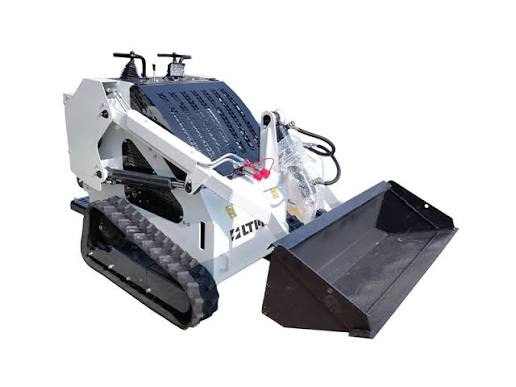
Electric Skid Loader Buying Guide: How to Choose the Right Model
Electric Skid Loader Buying Guide: How to Choose the Right Model
Choosing the right skid loader is an important decision for construction companies, landscaping businesses, agricultural operations, and material-handling facilities. The machine must match the demands of the job while offering reliable performance, manageable operating costs, and suitable maintenance requirements. With battery-powered equipment becoming more common, buyers now have additional factors to consider when comparing electric models with traditional diesel machines.
An Electric Skid Loader can be a practical choice for operations that value compact maneuverability, reduced local emissions, and quieter working conditions. However, not every model is suitable for every application. Understanding capacity, battery performance, charging requirements, attachment compatibility, and long-term ownership costs will help you select equipment that meets your business needs.
1. Identify Your Main Applications
Before comparing specifications, determine what you expect the machine to do. Different applications place different demands on lifting capacity, traction, battery life, and hydraulic performance.
Common applications include:
- Construction: Moving building materials, clearing debris, and preparing work areas.
- Landscaping: Transporting soil, mulch, gravel, and other materials.
- Agriculture: Handling feed, moving supplies, and performing selected farm maintenance tasks.
- Warehousing: Moving materials and handling compatible loads in industrial facilities.
- Indoor renovation: Supporting material movement in buildings where exhaust emissions and noise are important considerations.
Make a list of your most frequent tasks and the conditions in which the machine will operate. Consider whether the loader will primarily work indoors, outdoors, on uneven ground, or in restricted spaces. This information provides a useful starting point for evaluating suitable models.
2. Check the Rated Operating Capacity
Lifting capacity is one of the most important specifications when purchasing a skid loader. The machine must safely handle your typical loads without exceeding its rated limits.
When comparing models, review the rated operating capacity, tipping-load information, lifting height, and stability characteristics. These specifications help establish whether a loader can manage your materials and complete tasks efficiently.
It is important to distinguish between rated operating capacity and maximum tipping load. They are not interchangeable measurements, and operators must follow the manufacturer’s specified limits.
Also account for the weight of attachments, the shape and distribution of the load, ground conditions, and the height at which materials must be lifted. A machine that performs well with light materials may not be appropriate for heavier or uneven loads.
3. Evaluate Battery Capacity and Runtime
Battery performance is especially important when buying electric equipment. A loader that cannot complete the required workload between charging periods may cause delays and reduce productivity.
Consider the following factors when reviewing battery specifications:
- Battery capacity: Indicates the amount of energy the battery can store, usually expressed in kilowatt-hours (kWh).
- Expected operating time: Depends on workload, driving patterns, hydraulic use, temperature, and machine configuration.
- Charging duration: Determines how long the equipment must remain connected to a charger.
- Battery service life: Depends on battery chemistry, charging practices, temperature management, and usage patterns.
- Battery warranty: Clarifies the coverage period and the conditions that apply to battery repairs or replacement.
Ask the supplier for realistic runtime estimates under working conditions similar to yours. Published figures may reflect specific test conditions, so actual performance can vary.
If the machine will operate for long shifts, determine whether scheduled charging breaks or additional charging arrangements will be necessary.
4. Understand Charging Requirements
A suitable charging setup is essential for keeping electric skid loaders productive. Before purchasing, verify the machine’s charging specifications and confirm that your workplace can provide the required electrical supply.
Check the charger type, input voltage, charging power, connector compatibility, and estimated charging time. You should also ask whether the charger is included in the purchase price or sold separately.
For a permanent worksite, it may be possible to establish a dedicated charging area. Businesses that move equipment between sites should consider how easily charging can be arranged at different locations.
A practical charging plan should account for working hours, breaks, overnight charging opportunities, and the availability of backup equipment if charging is delayed.
5. Compare Motor Power and Hydraulic Performance
Battery capacity alone does not determine how effectively a skid loader performs. Motor power and hydraulic capability also influence its ability to move, lift, and operate attachments.
When reviewing specifications, examine:
- Drive motor power and machine travel performance.
- Hydraulic flow rate and operating pressure.
- Lifting force and lift height.
- Traction and stability on the intended surfaces.
- Performance when using demanding attachments.
The correct combination depends on the work being performed. A loader used primarily for transporting lightweight materials may have different requirements from one expected to operate hydraulic attachments or handle heavy construction materials.
Confirm that the machine’s hydraulic system is compatible with the tools you plan to use. If an attachment requires higher hydraulic flow than the loader can provide, performance may be limited.
6. Choose the Right Size and Configuration
A compact machine can be useful in confined spaces, but the smallest model is not always the best option. Buyers need to balance overall dimensions with lifting capacity, stability, ground clearance, and maneuverability.
Measure access points such as doorways, gates, ramps, and narrow aisles. Consider the machine’s width, height, turning requirements, operating weight, and transportation dimensions.
For indoor applications, also evaluate floor load limits and the available turning space. For outdoor work, ground clearance and traction may be more important, particularly on uneven terrain.
The right configuration should provide enough capability for the workload without making the machine unnecessarily difficult to transport or operate.
7. Review Attachment Compatibility
Attachments can expand a skid loader’s usefulness across different tasks. Depending on the model, compatible tools may include buckets, pallet forks, grapples, augers, and other material-handling or ground-working equipment.
Before buying, identify the attachments you expect to use regularly. Confirm that the loader supports their mounting systems, hydraulic requirements, weight limits, and electrical connections where applicable.
It is also worth checking how quickly attachments can be changed. A compatible quick-attach system can reduce downtime when switching between tasks.
Avoid assuming that an attachment will fit simply because it is designed for a skid loader. Compatibility should always be confirmed against the manufacturer’s specifications.
8. Compare Safety Features
Safety should be a major part of the buying process, particularly when equipment will operate near workers, vehicles, or members of the public.
Review the machine’s operator protection structure, seat belt or restraint system, visibility, warning alarms, lighting, and control layout. Depending on the model, other features may include safety interlocks, emergency-stop functions, and systems designed to prevent unintended movement.
For electric equipment, examine the manufacturer’s battery safety procedures, charging instructions, and electrical protection features. Ask what training is required for operators and maintenance personnel.
A safe machine also needs to match the environment in which it will work. Narrow indoor spaces, pedestrian traffic, slippery surfaces, and uneven ground can introduce risks that must be addressed through operating procedures and site planning.
9. Calculate the Total Cost of Ownership
The purchase price is only one part of the financial decision. A proper comparison should include the costs of operating, maintaining, charging, and eventually replacing major components.
Consider these expenses:
| Cost factor | What to evaluate |
|---|---|
| Initial purchase | Machine price, included equipment, delivery, and setup |
| Electricity | Local electricity rates and expected energy consumption |
| Maintenance | Scheduled inspections, hydraulic servicing, tires or tracks, and parts |
| Battery | Warranty, expected service life, and potential replacement costs |
| Attachments | Purchase, installation, and maintenance costs |
| Charging equipment | Charger price and any necessary electrical installation |
| Downtime | Charging interruptions, repairs, and access to replacement equipment |
| Resale value | Expected condition, battery health, and local market demand |
Electric models may reduce fuel and certain maintenance expenses, but savings depend on local conditions and machine utilization. Compare estimated costs over several years rather than relying on a single operating-cost figure.
If you are replacing an existing diesel loader, use your current fuel consumption, service expenses, and working hours to build a realistic comparison.
10. Assess Durability and Build Quality
A skid loader must withstand the physical demands of its working environment. Examine the frame, lifting arms, attachment points, tires or tracks, hydraulic components, and protective covers.
Ask about the machine’s intended duty cycle and the conditions for which it is designed. Equipment used frequently on rough construction sites may require different specifications from a loader operating mainly on smooth warehouse floors.
Review product documentation and request details about component quality, corrosion protection, battery protection, and recommended inspection intervals. If possible, arrange a demonstration to assess handling, visibility, control responsiveness, and general build quality.
A lower purchase price may not represent good value if the machine cannot reliably handle the required workload.
11. Check Warranty, Service, and Spare Parts
Reliable after-sales support can have a significant effect on equipment ownership. Before choosing a supplier, find out how warranty claims are handled and whether technical assistance is available when problems occur.
Ask specific questions about:
- Battery and electric motor warranty coverage.
- Coverage for hydraulic components and other major parts.
- Availability and delivery time for replacement parts.
- Access to qualified technicians.
- Routine servicing requirements.
- Operator training and troubleshooting support.
Read warranty terms carefully, including exclusions, maintenance requirements, and any conditions related to battery charging or storage.
For businesses that depend on equipment every day, access to technical support and spare parts may be just as important as the machine’s headline specifications.
12. Compare Suppliers Before Making a Decision
Choosing a suitable supplier involves more than finding the lowest quotation. Look for clear technical documentation, transparent warranty terms, responsive communication, and evidence that the supplier understands your intended application.
Request detailed specifications for each model under consideration. Confirm the rated operating capacity, battery capacity, charging requirements, hydraulic performance, dimensions, and compatible attachments.
It is also helpful to ask for a demonstration or practical assessment when available. Testing the machine under representative conditions can reveal limitations that are not obvious from a specification sheet.
Compare quotations on an equivalent basis. Check whether prices include chargers, attachments, delivery, training, and other necessary items so that you can evaluate the actual cost of putting the equipment into service.
13. Common Buying Mistakes to Avoid
A careful selection process can prevent expensive problems after delivery. Watch for these common mistakes:
- Choosing based only on price: A low initial cost may hide limitations in performance, warranty, or support.
- Ignoring battery runtime: A machine that cannot meet daily operating requirements may cause avoidable downtime.
- Overlooking charging access: The equipment may be unsuitable if the site lacks an appropriate electrical supply.
- Selecting insufficient capacity: A loader should match typical loads while remaining within its rated operating limits.
- Assuming all attachments are compatible: Hydraulic flow, mounting systems, and weight limits must be checked.
- Underestimating maintenance: Electric equipment still requires regular inspections and servicing.
- Skipping supplier checks: Limited parts availability or technical support can affect long-term productivity.
Avoiding these mistakes helps ensure that the selected machine is suited to both current operations and foreseeable business needs.
Conclusion
Choosing the right electric skid loader requires a balanced assessment of capacity, battery performance, charging infrastructure, motor power, attachment compatibility, safety, and total ownership costs. The best model is not necessarily the largest or least expensive one; it is the machine that can complete the required work reliably under the conditions in which it will operate.
Start by identifying your main applications, then compare specifications and request clear information about runtime, charging, warranty, and service support. By evaluating these factors before purchasing, businesses can make a more informed decision and select equipment that supports long-term productivity and efficient operations.