


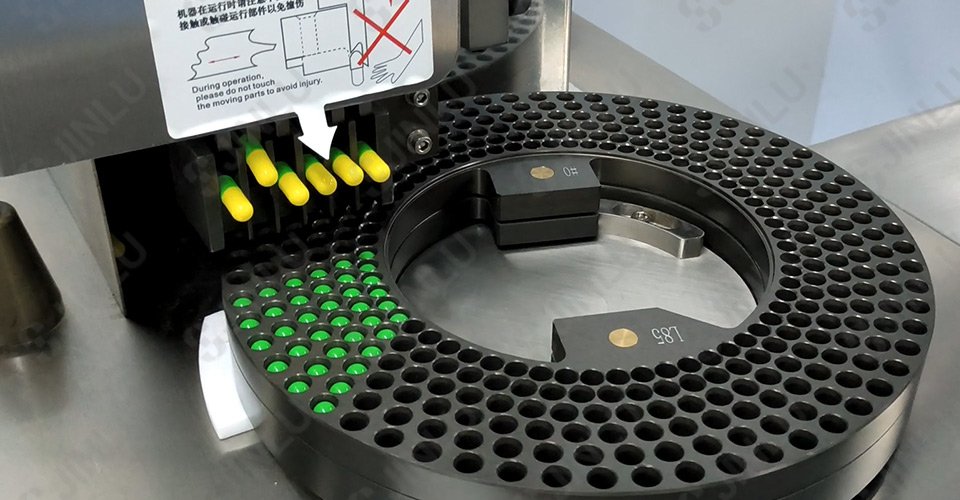
Encapsulation Machine Types: Manual, Semi-Automatic, and Fully Automatic
Capsule production is an essential part of pharmaceutical, nutraceutical, and herbal manufacturing. To meet different production scales and quality requirements, various types of encapsulation systems are used in the industry. These machines are designed to handle the process of filling empty capsules with powders, granules, or pellets in a controlled and hygienic manner.
Depending on the level of automation and production needs, an encapsulation machine can be categorized into three main types: manual, semi-automatic, and fully automatic. Each type serves a specific purpose and is suitable for different manufacturing environments.
Table of Contents
ToggleManual Encapsulation Machines
Manual encapsulation machines are the simplest form of capsule filling equipment. They are widely used in small-scale production setups, pharmacies, and research laboratories where production volume is limited.
How They Work
In manual machines, operators perform most of the tasks by hand. This includes:
- Separating capsule bodies and caps
- Filling powder using manual trays or tools
- Closing capsules individually
Key Characteristics
- Low initial investment
- Simple operation with minimal technical requirements
- Suitable for small batches and experimental work
- High dependency on operator skill
While cost-effective, manual systems are not suitable for large-scale production due to their slow output and potential for human error.
Semi-Automatic Encapsulation Machines
Semi-automatic systems offer a balance between manual control and automation. They are commonly used in medium-scale production environments where flexibility and efficiency are both important.
How They Work
These machines automate several key steps while still requiring operator involvement for loading and monitoring. Typical operations include:
- Automatic capsule separation
- Controlled powder dosing
- Mechanical filling and locking
- Manual feeding and unloading
Key Characteristics
- Improved production speed compared to manual machines
- Better dosing accuracy and consistency
- Suitable for multiple product types and capsule sizes
- Moderate investment cost
Semi-automatic machines are widely used in pharmaceutical and nutraceutical industries due to their versatility and reliability.
Fully Automatic Encapsulation Machines
Fully automatic machines represent the highest level of automation in capsule filling technology. These systems are designed for large-scale industrial production where efficiency, speed, and precision are critical.
How They Work
In fully automated systems, the entire encapsulation process is controlled by advanced mechanical and electronic systems. The machine performs:
- Automatic capsule feeding and orientation
- Precise dosing of formulations
- High-speed filling and locking
- Automatic rejection of defective capsules
Key Characteristics
- High production capacity
- Minimal human intervention
- Advanced control systems for accuracy
- Suitable for mass production environments
These machines are commonly used in large pharmaceutical companies that require continuous, high-volume production.
Key Differences Between Encapsulation Machine Types
Each type of encapsulation machine offers distinct advantages depending on production requirements.
1. Production Scale
- Manual: Small-scale production
- Semi-automatic: Medium-scale production
- Fully automatic: Large-scale industrial production
2. Level of Automation
- Manual: Fully operator-dependent
- Semi-automatic: Hybrid system
- Fully automatic: Minimal human involvement
3. Cost and Investment
- Manual: Low cost
- Semi-automatic: Moderate cost
- Fully automatic: High investment
4. Efficiency and Output
- Manual: Low output
- Semi-automatic: Balanced output
- Fully automatic: High-speed production
Applications Across Industries
Encapsulation machines are widely used across multiple industries due to their ability to deliver precise and hygienic capsule filling.
Pharmaceutical Industry
Used for producing prescription medicines, antibiotics, and controlled dosage drugs.
Nutraceutical Industry
Used for vitamins, dietary supplements, and wellness products.
Herbal and Ayurvedic Sector
Used for encapsulating herbal powders and natural extracts.
Research and Development
Used for testing new formulations and producing trial batches.
Choosing the Right Encapsulation Machine
Selecting the appropriate machine depends on several factors:
- Production volume requirements
- Budget constraints
- Product variety and formulation type
- Level of automation needed
- Future scalability plans
Small businesses often start with manual or semi-automatic systems, while larger manufacturers invest in fully automated solutions for long-term efficiency.
Conclusion
Encapsulation machines play a vital role in modern capsule production by ensuring accuracy, hygiene, and efficiency. The three main types—manual, semi-automatic, and fully automatic—serve different production needs and industrial scales.
Understanding their differences helps manufacturers choose the right equipment based on their operational goals. Whether for small-scale production or large industrial output, the right encapsulation machine supports consistent quality and improved productivity in capsule manufacturing.