


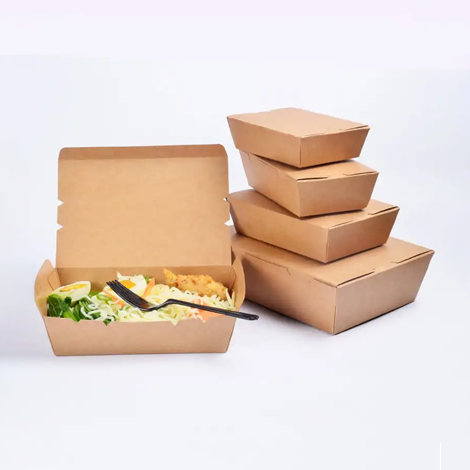
Important Features to Look for When Buying Cardboard Bento Boxes in Bulk
Choosing the right food packaging is an important decision for restaurants, catering companies, and takeaway businesses. When purchasing packaging in large quantities, businesses need to consider more than just the price. Factors such as material quality, compartment design, durability, storage requirements, and food compatibility can directly affect daily operations and customer satisfaction.
For businesses that regularly serve combination meals, Cardboard Bento Boxes offer a convenient way to organize different food portions in one container. However, buying these boxes in bulk requires careful evaluation to ensure that the selected packaging meets both operational and food service requirements.
1. Check the Quality of Cardboard Material
Material quality should be one of the first considerations when purchasing packaging in bulk. Containers need sufficient strength to hold food without bending, collapsing, or losing their shape during normal handling.
Businesses should evaluate the thickness, construction, and overall durability of the cardboard. The material should be appropriate for the weight and type of food being served.
It is also important to confirm that the packaging meets applicable food-contact safety requirements, particularly when it will be used for hot or oily meals.
2. Choose the Right Compartment Design
The main purpose of bento-style packaging is to organize multiple food items within one container. Different businesses have different requirements depending on their menus.
For example, restaurants serving rice combinations may need one larger compartment for the main dish and smaller sections for vegetables or side portions. Businesses offering salads or snack combinations may prefer a different arrangement.
Before placing a bulk order, consider:
- The number of compartments required.
- The dimensions of individual sections.
- The depth of each compartment.
- The type of meals being served.
- Whether food items need to remain separate.
Selecting an appropriate layout helps improve food presentation and makes portion organization easier.
3. Evaluate Grease and Moisture Resistance
Food packaging frequently comes into contact with oils, sauces, and moisture. If the cardboard material is unsuitable for these conditions, it may become soft, weaken, or leak during transportation.
Some food containers include protective coatings or treatments designed to improve grease and moisture resistance.
When evaluating bulk packaging options, businesses should check the manufacturer’s specifications and test the boxes with actual menu items. This is especially important for restaurants serving fried foods, saucy dishes, and meals containing moist ingredients.
4. Look for Secure and Reliable Lid Closures
A suitable lid is essential for protecting takeaway meals during storage and transportation. Poorly fitting closures may increase the risk of accidental opening, contamination, or food displacement.
Businesses should check whether the lid fits securely and remains closed during ordinary handling.
The closure design should also be convenient for customers to open without damaging the container or disturbing the food arrangement.
Testing the packaging with filled containers before making a large purchase can help identify potential problems.
5. Consider Different Sizes and Portion Requirements
Not every meal requires the same container dimensions. Small portions may look poorly arranged in oversized packaging, while larger meals can become compressed in containers with limited capacity.
Restaurants should select box sizes according to their menu portions and serving styles.
For businesses offering several meal categories, maintaining a small range of container sizes may provide greater flexibility. This allows employees to choose suitable packaging without wasting unnecessary space or material.
6. Assess Storage and Stacking Convenience
Bulk purchases require sufficient storage space. Packaging that is difficult to organize can create unnecessary challenges in restaurant kitchens, warehouses, and supply rooms.
Before ordering, businesses should check the packaging dimensions, stacking arrangement, and storage requirements.
Lightweight boxes with practical stacking designs can help maintain an organized inventory area. It is also useful to consider how easily employees can access and assemble containers during busy service hours.
7. Review Environmental and Material Information
Environmental considerations are increasingly relevant when selecting food packaging. Many businesses are interested in paper-based materials because they may offer recycling opportunities under suitable conditions.
However, not all cardboard containers have the same environmental characteristics. Coatings, adhesives, material combinations, and food contamination can influence whether packaging is recyclable or compostable.
Before purchasing in bulk, review the supplier’s material documentation and confirm whether environmental claims are supported by relevant certifications or product information.
8. Compare Pricing Without Ignoring Quality
Price is an important factor when purchasing packaging in large quantities, but the cheapest option is not always the most economical.
Containers that lack sufficient strength or moisture resistance may result in damaged orders, additional packaging waste, and customer complaints.
Businesses should compare suppliers based on several factors:
- Price per unit and minimum order quantity.
- Material quality and construction.
- Available sizes and compartment configurations.
- Product consistency across batches.
- Delivery costs and lead times.
- Return and replacement policies.
Evaluating the overall value of a product helps businesses make more informed purchasing decisions.
9. Check Supplier Reliability and Bulk Availability
A reliable packaging supplier plays an important role in maintaining uninterrupted restaurant operations. Businesses that purchase in bulk need suppliers capable of providing consistent product quality and dependable delivery schedules.
Before committing to a large order, review the supplier’s product specifications, ordering conditions, and communication process.
It is also advisable to request samples when available. Testing a sample allows businesses to examine the material, lid fit, compartment dimensions, and overall performance before purchasing a larger quantity.
10. Test Packaging with Actual Menu Items
Product descriptions alone may not reveal how a container performs under real serving conditions. A practical test can help businesses identify whether the packaging is suitable for their food.
Fill sample boxes with different menu items and assess their performance during normal handling and transportation.
Pay attention to:
- Whether the container maintains its shape.
- Whether compartments provide sufficient space.
- Whether moisture or grease affects the material.
- Whether lids remain securely closed.
- Whether meals maintain an acceptable appearance.
Testing different food combinations before bulk purchasing can reduce the risk of selecting unsuitable packaging.
Conclusion
Buying cardboard bento boxes in bulk requires careful attention to material quality, compartment design, moisture resistance, lid security, storage convenience, and supplier reliability. Price matters, but overall packaging performance should remain a priority.
By evaluating product specifications, comparing suppliers, and testing samples with actual menu items, restaurants and food businesses can make better purchasing decisions. Choosing suitable packaging in advance helps maintain consistent meal presentation, supports efficient operations, and provides a more convenient takeaway experience for customers.