


Understanding Heat Storage Tank Technology for Efficient Industrial Thermal Energy Management
Industrial facilities often require reliable thermal energy to support manufacturing processes, heating operations, material processing, and temperature-sensitive production activities. However, heat demand does not always match the availability of energy. Production schedules, changing workloads, and fluctuations in energy supply can make it difficult to maintain consistent operating temperatures. Thermal energy storage provides a practical way to manage these variations and improve the efficiency of industrial heating systems.
A well-designed Heat Storage Tank allows facilities to store thermal energy and release it when heating demand increases. By separating heat generation from heat consumption, this technology can reduce unnecessary equipment cycling, support more stable temperatures, and improve energy utilization. Understanding its operating principles, components, and selection requirements helps businesses determine whether thermal storage is suitable for their applications.
What Is a Heat Storage Tank?
A heat storage tank is a thermal energy storage vessel that holds heated water, thermal fluid, or another suitable storage medium for later use. It works alongside heating equipment such as boilers, heat pumps, solar thermal collectors, and industrial heating systems.
Instead of generating heat only when it is immediately needed, a facility can produce thermal energy during periods of lower demand and store the excess for later use.
Common applications include:
- Industrial process heating.
- Commercial building heating systems.
- Hot water supply and distribution.
- District heating networks.
- Solar thermal energy storage.
- Manufacturing and material processing.
- Facilities with fluctuating heating requirements.
The tank’s design depends on the storage medium, operating temperature, system pressure, heat demand, and required storage duration.
How Heat Storage Tank Technology Works
Thermal storage systems generally operate through three main stages: charging, holding, and discharging.
1. Charging the Tank
During the charging stage, a heat source transfers thermal energy into the storage medium. This may involve circulating heated water or thermal oil through a heat exchanger or directly through a suitable system configuration.
Charging can take place when energy is readily available, when production demand is relatively low, or when energy prices are more favorable.
2. Retaining Stored Heat
Once the required temperature is reached, the tank stores thermal energy until the facility needs it. Insulation helps reduce heat loss through the tank walls, roof, and other exposed surfaces.
The effectiveness of heat retention depends on insulation quality, tank construction, ambient temperature, and the properties of the storage medium.
3. Releasing Thermal Energy
When heating demand increases, stored energy is transferred to the facility’s heating circuit or production equipment. Pumps, valves, and heat exchangers help regulate the flow and temperature of the thermal medium.
This process allows the heating system to respond to changing demand without requiring the heat source to operate continuously at its maximum output.
Main Types of Thermal Energy Storage Tanks
Different storage technologies are suitable for different operating temperatures, energy requirements, and industrial applications.
Sensible Heat Storage Tanks
<AsyncImage query=”large industrial hot water thermal energy storage insulated steel tank” aspectRatio=”16:9″ width=”100%”/>
Sensible heat storage is one of the most widely used thermal storage methods. It stores energy by increasing the temperature of a material without changing its physical state.
Water is commonly used because it has a relatively high specific heat capacity, is readily available, and is practical for many heating applications.
These systems are often used for hot water storage, building heating, and industrial processes requiring moderate operating temperatures.
Thermal Oil Storage Systems
<AsyncImage query=”industrial thermal oil heating storage tank piping system factory” aspectRatio=”16:9″ width=”100%”/>
Thermal oil systems use specialized heat-transfer fluids to store and distribute energy. They are useful in industrial applications where operating temperatures may exceed the practical range of conventional hot water systems.
The fluid, tank materials, seals, and circulation components must be compatible with the required temperature and operating conditions.
Phase Change Material Storage
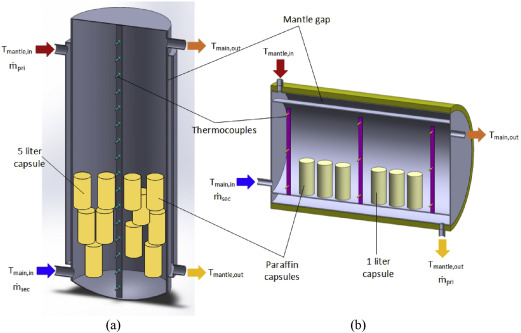
Phase change materials store and release thermal energy as they change between solid and liquid states. During the phase transition, they can absorb or release substantial amounts of energy within a relatively narrow temperature range.
This technology may be suitable where compact storage and controlled temperature delivery are important. However, material selection, heat transfer rates, containment, and system cost require careful evaluation.
Essential Components of a Heat Storage System
A thermal storage tank operates as part of a larger system. Its supporting components influence energy transfer, temperature stability, and overall reliability.
Insulated Tank Body
The tank body contains the storage medium and provides structural support. It must be designed for the expected operating temperature, pressure, fluid properties, and installation environment.
Thermal Insulation
Insulation reduces heat loss and helps maintain the stored energy for longer periods. Common insulation materials are selected according to temperature resistance, thermal conductivity, durability, and applicable safety requirements.
Heat Exchangers
Heat exchangers transfer energy between the storage medium and the heating circuit. Their design affects heat transfer efficiency, flow requirements, and system response.
Pumps and Circulation Equipment
Pumps move the thermal medium through the tank and connected equipment. Correct pump sizing helps maintain suitable flow rates without excessive energy consumption.
Temperature and Pressure Sensors
Sensors monitor important operating conditions and provide information for system control. Accurate measurements help operators maintain suitable temperature levels and identify abnormal conditions.
Valves and Control Systems
Valves regulate fluid movement, while control systems coordinate charging and discharging operations. Automated controls can adjust system behavior according to temperature readings and heating demand.
Key Benefits of Industrial Heat Storage Technology
Thermal storage can offer several advantages when integrated into a properly designed heating system.
Improved Energy Utilization
Heat storage allows facilities to use thermal energy when it is available rather than relying entirely on immediate production. This can improve the utilization of boilers, heat pumps, and other heating equipment.
Better Management of Peak Demand
Industrial heating requirements can fluctuate throughout the day. Stored heat can help cover periods of increased demand, reducing the need to operate heat-generating equipment continuously at peak capacity.
More Stable Process Temperatures
Some manufacturing processes require consistent heating conditions. A storage tank can help smooth temperature fluctuations by providing an additional source of thermal energy.
Integration With Renewable Energy
Solar thermal systems and other renewable heat sources may produce energy at times that do not correspond with actual demand. Thermal storage helps retain available heat for later use.
Reduced Equipment Cycling
By supplying stored energy during temporary demand increases, thermal storage may reduce frequent starts and stops of certain heating equipment. This can support more stable operation when the system is properly configured.
Factors to Consider When Selecting a Heat Storage Tank
Choosing a suitable tank requires an understanding of the facility’s energy requirements and operating environment.
1. Required Storage Capacity
Storage capacity should reflect the amount of thermal energy needed and the expected duration of storage.
Engineers should evaluate heating demand, charging time, discharge requirements, and available energy sources before determining the appropriate tank volume.
2. Operating Temperature Range
The storage medium and tank construction must be suitable for the minimum and maximum operating temperatures. Higher-temperature applications may require specialized materials, insulation, seals, and instrumentation.
3. Pressure Rating
For pressurized systems, the tank must be designed and certified for the intended operating pressure. Pressure protection devices and inspection requirements should also be considered.
4. Insulation Performance
Effective insulation helps reduce energy losses during storage. Compare thermal conductivity, thickness, temperature resistance, moisture protection, and expected service life.
5. Storage Medium Compatibility
Water, thermal oil, and phase change materials have different thermal properties and operating requirements. The selected medium must be appropriate for the application and compatible with all wetted components.
6. Installation Space
Evaluate the available footprint, tank height, foundation requirements, access routes, and maintenance clearance. The installation area must support the tank’s full operating weight.
7. Control and Monitoring Requirements
Temperature sensors, pressure instruments, level indicators, and automated controls help operators monitor system performance. The control strategy should match the complexity of the heating process.
Installation and Integration Considerations
Correct installation is essential for achieving reliable thermal storage performance. Before installation, engineers should assess the foundation, piping layout, insulation requirements, electrical connections, and access for future maintenance.
The tank should be positioned to support efficient circulation and convenient integration with existing heating equipment. Piping should be designed to limit unnecessary pressure losses and avoid arrangements that make air removal, draining, or servicing difficult.
Thermal expansion must also be considered. Pipes, supports, valves, and connections should accommodate expected temperature changes without creating excessive mechanical stress.
For larger systems, professional commissioning should verify flow rates, temperature measurements, pressure protection, control sequences, and insulation condition before normal operation begins.
Maintenance Practices for Long-Term Performance
Regular inspection helps identify problems that may reduce thermal efficiency or compromise equipment safety.
A practical maintenance program should include:
- Inspecting tank surfaces for corrosion, damage, and signs of leakage.
- Checking insulation for deterioration, moisture, or damaged protective coverings.
- Monitoring pumps, valves, and circulation equipment for unusual noise or vibration.
- Testing temperature sensors and control instruments.
- Inspecting heat exchangers for fouling or reduced heat transfer performance.
- Checking pressure protection devices according to manufacturer requirements.
- Examining piping connections, supports, and expansion arrangements.
- Maintaining records of inspections, repairs, and operating conditions.
Maintenance procedures should follow the equipment manufacturer’s instructions and applicable industrial safety standards. Pressurized or high-temperature systems must be isolated and allowed to reach safe conditions before servicing.
Common Challenges in Thermal Energy Storage
Although thermal storage offers operational benefits, poorly designed systems can experience performance problems.
Excessive heat loss: Inadequate insulation or damaged protective coverings can reduce storage efficiency.
Incorrect capacity selection: An undersized tank may not meet demand, while an oversized system can increase capital and installation costs.
Poor circulation: Incorrect pump sizing or unsuitable piping arrangements can result in uneven temperatures and inefficient heat transfer.
Material incompatibility: Storage fluids, seals, and tank materials must be suitable for the operating temperature and chemical environment.
Insufficient monitoring: Inaccurate sensors or inadequate controls can make it difficult to maintain reliable operating conditions.
Addressing these issues during system design and commissioning helps improve performance and reduce long-term operating difficulties.
The Future of Industrial Thermal Energy Storage
Industrial facilities are increasingly exploring ways to improve energy efficiency and manage changing energy costs. Thermal storage technology can support these goals by allowing heat generation and consumption to occur at different times.
Developments in insulation materials, digital monitoring, automated controls, and advanced storage media may improve system performance and expand the range of suitable applications. Integration with renewable energy sources and industrial waste heat recovery can also help facilities make better use of available thermal energy.
The most effective solutions will depend on practical engineering, reliable equipment, and careful evaluation of each facility’s heating requirements.
Conclusion
Heat storage tank technology provides industrial facilities with a practical way to store thermal energy and release it when required. By improving energy utilization, supporting stable process temperatures, and helping manage fluctuating demand, thermal storage can contribute to more efficient heating operations.
Selecting the right system involves evaluating storage capacity, operating temperature, pressure requirements, insulation, storage medium, and control arrangements. With proper installation, monitoring, and maintenance, a well-designed thermal storage system can provide dependable performance and long-term value for industrial energy management.